
Call Support 24x7
+91 7559349467
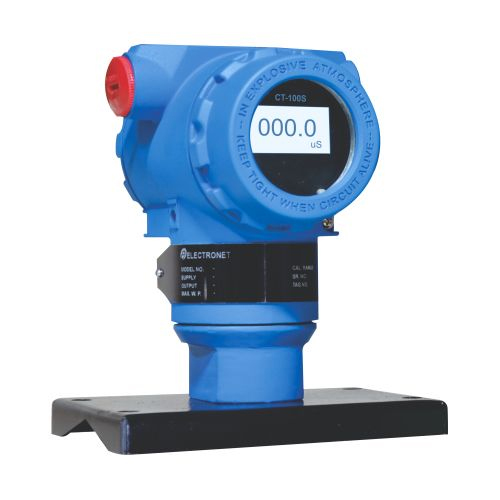
A TDS Conductivity Transmitter is an analytical instrument used to monitor the electrical conductivity of water and, depending on the instrument's configuration, estimate Total Dissolved Solids (TDS). These measurements help operators assess water quality and monitor dissolved ionic substances in industrial and commercial water systems.
Electrical conductivity indicates how easily an aqueous solution conducts electricity due to dissolved ions. TDS represents the concentration of dissolved substances in water. Because conductivity and TDS are related but different parameters, the suitability of a conductivity-based TDS reading depends on the liquid composition and the conversion method used by the instrument.
Tronsoft Technologies offers industrial instrumentation and water-quality measurement solutions for industrial and utility applications. Our TDS Conductivity Transmitter product page is intended for customers seeking instrumentation for water quality monitoring and process control. Contact our team to confirm the available model, measurement range, sensor compatibility, and output specifications for your application.
As a TDS Conductivity Transmitter Manufacturer in Bangalore, Tronsoft Technologies supports industrial customers looking for instruments to monitor dissolved substances and conductivity in water-based processes.
Conductivity measurement is widely used in water treatment and industrial utilities because changes in dissolved ionic content can affect the electrical conductivity of water. A conductivity transmitter receives a signal from a compatible conductivity sensor and processes it to provide a measurement for a display, monitoring system, or control system, depending on the selected model.
Some instruments also calculate or display an estimated TDS value using a conversion factor. This value is an estimate based on conductivity rather than a direct measurement of every dissolved substance. The appropriate conversion factor depends on the composition of the water and the measurement requirements.
When selecting a TDS conductivity transmitter, consider the expected conductivity range, required TDS range, sensor type, process temperature, chemical compatibility, installation method, and output requirements. These details help ensure that the instrument is appropriate for the intended application.
Tronsoft Technologies provides industrial instrumentation solutions and can help clarify the information needed to select a suitable water-quality monitoring instrument.
Conductivity measurements help monitor changes in dissolved ionic content in water. This information can be useful for evaluating water quality and observing changes during treatment or industrial operations.
A compatible conductivity sensor measures the electrical conductivity of the liquid. The transmitter processes the sensor signal and provides the measured value according to its supported configuration.
Where supported, the instrument may calculate an estimated TDS value from conductivity using a configured conversion factor. The suitability of this estimate depends on the composition of the liquid and the required measurement accuracy.
Conductivity and TDS information can help operators assess changes in water quality, identify unusual trends, and monitor selected industrial processes.
Depending on the model's output and communication options, the transmitter may be connected to compatible indicators, PLCs, SCADA systems, or other monitoring equipment.
Different applications require different sensor designs, measurement ranges, and installation arrangements. Selecting a transmitter according to actual process conditions helps avoid compatibility issues.
Conductivity measurement can be useful in water treatment, wastewater treatment, cooling-water systems, boiler feedwater monitoring, and other applications where conductivity is an important process parameter. The required instrument range and sensor must be verified for each application.
As a TDS Conductivity Transmitter Supplier in Bangalore, Tronsoft Technologies supports industrial buyers, water-treatment contractors, system integrators, OEMs, and plant maintenance teams seeking water-quality instrumentation.
A suitable transmitter should be selected according to the water being monitored and the intended purpose of the measurement. Applications involving low-conductivity purified water may require a different sensor configuration from applications involving higher-conductivity process water or wastewater.
Before purchasing, confirm the required measurement range, sensor cell constant or compatible sensor type, temperature compensation requirements, TDS conversion method, output signal, power supply, mounting arrangement, and environmental conditions.
Tronsoft Technologies provides industrial instrumentation and automation solutions for water and wastewater, manufacturing, chemicals, pharmaceuticals, and other industrial sectors. Contact our team to discuss your requirements and confirm the specifications of the appropriate product.
Technical specifications depend on the exact model and sensor configuration. Confirm the details below against the official product datasheet before publishing final specifications or placing an order.
| Parameter | Specification to confirm |
|---|---|
| Product type | TDS Conductivity Transmitter |
| Measurement principle | Electrical conductivity measurement |
| Measurement parameters | Conductivity and TDS, if supported |
| Conductivity range | Confirm the available range for the model |
| TDS range | Confirm the range and calculation method |
| Sensor type | Confirm compatible conductivity sensor or electrode |
| Temperature compensation | Confirm whether automatic or manual compensation is supported |
| Output signal | Verify the available analog or digital outputs |
| Communication | Confirm whether a communication protocol is available |
| Display | Verify whether a local display is provided |
| Power supply | Refer to the manufacturer's datasheet |
| Mounting | Confirm panel, wall, field, or other installation options |
| Process compatibility | Confirm sensor materials and permitted operating conditions |
| Enclosure protection | Verify the specified protection rating |
Conductivity monitoring helps assess dissolved ionic content during water treatment. It can support process monitoring and help operators identify changes in the water's conductivity.
Conductivity is commonly monitored in RO systems to evaluate changes in water quality across treatment stages. A suitable conductivity instrument can help operators observe permeate quality, subject to the system's measurement requirements and sensor range.
Conductivity monitoring is used in suitable boiler and utility water systems to help assess dissolved ionic content. The required range and sensor selection depend on the water chemistry and the monitoring point.
Industrial cooling-water systems may use conductivity measurements to monitor dissolved ionic content and support water management practices. The appropriate measurement range depends on the system design and treatment programme.
Conductivity can help identify changes in wastewater characteristics and support process observation. Because wastewater composition can vary significantly, sensor compatibility and fouling resistance should be considered.
Conductivity is an important measurement parameter in certain purified-water applications. The instrument must be appropriate for the required water-quality standards, measurement range, installation conditions, and applicable validation procedures.
Conductivity monitoring may be used in selected cleaning, rinsing, and water-treatment processes. The sensor materials and installation must be compatible with the process and relevant hygiene requirements.
Manufacturing facilities may use conductivity transmitters to monitor water quality in process lines, utility systems, and other applications where changes in dissolved ionic content are significant.
A typical conductivity transmitter system operates through the following steps:
Contact with the liquid: A compatible conductivity sensor is installed in the water or process stream.
Conductivity sensing: The sensor responds to the liquid's electrical conductivity based on its sensing design.
Signal processing: The transmitter receives and processes the sensor signal to calculate the conductivity value.
Temperature compensation: Where supported, the instrument compensates for the effect of temperature on conductivity using its configured method.
TDS calculation: If the instrument supports TDS measurement, it may convert the conductivity reading into an estimated TDS value using a configured conversion factor.
Display or transmission: The measured value is displayed or transmitted to a compatible monitoring or control system, depending on the model's features.
Reliable measurement depends on correct sensor selection, installation, calibration, temperature compensation, and maintenance. Sensor fouling, scaling, air bubbles, and changes in water composition can influence readings.
TDS and electrical conductivity are related measurements, but they are not identical.
Electrical conductivity (EC) measures the ability of a liquid to conduct electricity. It is influenced by the concentration and mobility of dissolved ions, temperature, and the composition of the liquid.
Total Dissolved Solids (TDS) refers to the total concentration of dissolved substances in water, commonly expressed in mg/L or ppm. A conductivity-based instrument estimates TDS by applying a conversion factor to the conductivity reading.
The relationship between the two parameters varies according to the dissolved substances present. For applications requiring a reliable TDS estimate, the conversion method should be appropriate for the water composition. Where a specific regulatory or laboratory method is required, verify that the instrument and measurement approach meet those requirements.
Before choosing a transmitter for your facility, review the following factors:
Measurement requirement: Decide whether you need conductivity measurement, TDS estimation, or both.
Conductivity range: Confirm the expected minimum and maximum conductivity of the process liquid.
TDS range: If TDS is required, check the instrument's calculation method and supported display range.
Water composition: Identify the dissolved substances and process conditions that may influence the conductivity-to-TDS relationship.
Sensor compatibility: Confirm the correct sensor design, cell constant, materials, and installation method.
Temperature compensation: Determine whether temperature compensation is required and which method the instrument supports.
Operating temperature: Check the permitted temperature limits for the sensor and transmitter.
Output and communication: Match the available outputs with your PLC, SCADA, indicator, or other monitoring equipment.
Installation conditions: Consider immersion, inline installation, mounting location, accessibility, and the possibility of scaling or fouling.
Calibration and maintenance: Review calibration procedures, sensor cleaning requirements, and replacement intervals.
Environmental protection: Confirm enclosure protection and electrical requirements for the installation environment.
Discussing these details with your instrumentation supplier can help you choose a product suitable for the intended process.
Tronsoft Technologies provides industrial instrumentation and process automation solutions for water and wastewater treatment, chemicals, pharmaceuticals, manufacturing, utilities, and infrastructure applications.
Customers can contact Tronsoft Technologies for product enquiries and assistance in identifying the technical information required for a water-quality monitoring application.
Industrial instrumentation portfolio: Products and solutions across flow, level, pressure, temperature, and water-quality measurement.
Application-oriented support: Assistance in reviewing measurement requirements and installation conditions.
Process automation experience: Instrumentation and automation solutions for industrial and utility operations.
System integration considerations: Guidance on checking compatibility with the intended monitoring or control system.
Product enquiry assistance: Help clarifying available configurations and the specifications to confirm before purchase.
For a TDS Conductivity Transmitter enquiry, share your application, expected conductivity range, required TDS measurement, process temperature, sensor requirements, and control-system interface.
1. What is a TDS Conductivity Transmitter?
A TDS Conductivity Transmitter is an instrument used to measure electrical conductivity and, where supported, estimate the total dissolved solids in water. It is used in water-quality monitoring and selected industrial processes.
2. What is the difference between TDS and conductivity?
Conductivity measures how readily a liquid conducts electricity due to dissolved ions. TDS refers to the concentration of dissolved substances in water. TDS can be estimated from conductivity, but the relationship depends on the composition of the water.
3. Where are TDS conductivity transmitters used?
They may be used in water treatment plants, RO systems, cooling-water systems, boiler utilities, wastewater treatment, industrial process water, and other applications where conductivity monitoring is required.
4. Can a conductivity transmitter measure TDS?
Some conductivity transmitters can calculate and display an estimated TDS value using a conversion factor. Confirm that the selected model supports TDS calculation and that the conversion method suits your water composition.
5. Why is temperature compensation important in conductivity measurement?
Electrical conductivity changes with temperature. Temperature compensation helps express measurements in a consistent way according to the instrument's configured method. The correct compensation approach depends on the application and instrument.
6. Can a TDS conductivity transmitter be connected to a PLC?
It can be connected if the transmitter provides an output compatible with the PLC input. Check the available output signals, wiring requirements, power supply, and communication options for the selected model.
7. How often should a conductivity sensor be calibrated?
Calibration frequency depends on the sensor, application, water quality, operating conditions, and required measurement performance. Follow the manufacturer's calibration recommendations and the site's quality procedures.
8. How do I choose a suitable TDS conductivity transmitter?
Consider the conductivity range, required TDS estimation, water composition, sensor type, temperature conditions, installation method, output signal, and maintenance requirements.
9. How can I enquire about a TDS Conductivity Transmitter from Tronsoft Technologies?
Contact Tronsoft Technologies with your application details, expected conductivity range, TDS requirements, process temperature, and output or control-system needs. The team can help clarify the product information required for selection.
Contact Us
Feel Free To Get In Touch With Us
Office Address:
Karve road, near Garware metro stn, Pune | 411030 India
Follow Us:-
Looking For More?
Call Support 24x7
+91 7559349467