
Call Support 24x7
+91 7559349467
Tronsoft Technologies provides industrial instrumentation and automation solutions to support flow measurement, process monitoring, and data visibility across industrial applications. Flowmeter Telemetry and Remote Monitoring solutions help businesses collect flow measurement data from field installations and make it available at a remote monitoring location through a suitable communication system.
Remote flow monitoring can be useful for water distribution networks, industrial pipelines, pumping stations, water treatment plants, and other installations where regularly accessing every meter physically is difficult. Depending on the selected system, flow data can be transmitted to a central monitoring platform, control room, or compatible supervisory system for review and analysis.
By combining compatible flow meters, communication equipment, and monitoring software, organisations can improve visibility into flow conditions, support operational decisions, and reduce dependence on manual meter readings.
Tronsoft Technologies supports industrial flow measurement and automation requirements. The appropriate telemetry configuration depends on the flow meter, communication infrastructure, monitoring objectives, and site conditions.
Flowmeter telemetry is the process of collecting flow measurement data from a flow meter and transmitting that information to another location for monitoring, recording, or analysis.
A conventional flow meter measures the movement or volume of a fluid through a pipe or channel. When connected to a compatible telemetry system, the measurement data can be communicated to a remote monitoring platform, allowing authorised personnel to review readings without visiting the installation each time.
Depending on the equipment and configuration, the system may support the transmission of instantaneous flow rate, totalised flow, meter status, or other available measurement parameters.
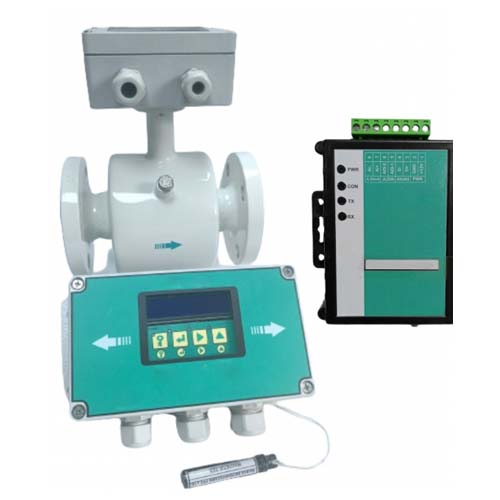
A flowmeter telemetry solution generally includes the following components:
Flow meter: Measures the flow rate or volume of the fluid.
Data acquisition interface: Receives the meter's available output or communication data.
Telemetry device: Collects and transmits data using a supported communication method.
Communication network: Carries information from the field installation to the remote destination.
Monitoring platform: Presents available measurements for review, recording, or analysis.
The exact components and capabilities vary according to the flow meter and the selected telemetry architecture.
Telemetry can make flow readings available at a central or remote location, reducing the need for frequent physical visits to accessible meter points. Remote access depends on the communication network, monitoring platform, and system configuration.
A suitable system can collect supported flow measurements from compatible instruments. The available data may include instantaneous flow rate, cumulative volume, and selected device status information.
Depending on the communication technology and configured reporting interval, flow readings can be transmitted periodically or more frequently. The achievable update rate depends on the device, network, power supply, and monitoring application.
When connected to a suitable data logger or software platform, telemetry systems can maintain historical flow records. These records can help operators review consumption patterns, compare readings, and investigate changes in system performance.
Depending on the available interfaces and protocols, telemetry equipment may integrate with PLC, SCADA, or other compatible monitoring systems. Compatibility should be verified before selecting the equipment.
Remote monitoring is particularly useful where meters are installed across multiple locations, such as water distribution networks, pumping stations, industrial facilities, or remote utility sites.
Communication methods may include cellular networks, Ethernet, or other supported wired and wireless technologies. The appropriate option depends on network availability, installation distance, power requirements, and data transmission needs.
A flowmeter telemetry system collects measurements at the field level and transfers them to a remote destination. A typical operating process involves the following steps.
The flow meter measures the fluid passing through the pipeline or channel. The measurement technology depends on the selected meter, application, and fluid characteristics.
The telemetry interface receives data from the flow meter through a compatible output, communication port, or other supported connection.
The connected equipment prepares the available measurement data for transmission. The parameters collected depend on the flow meter's output capabilities and the telemetry configuration.
The telemetry device transmits the collected information over a supported communication network to the designated monitoring destination.
The monitoring platform displays the received information and may store historical readings, depending on its functionality.
Operators can review flow trends and available measurement information to support consumption monitoring, maintenance planning, and investigation of unusual readings.
Remote monitoring does not automatically guarantee continuous connectivity. Communication coverage, power availability, device configuration, and platform functionality all influence system performance.
Flowmeter telemetry can support applications where flow measurements need to be reviewed across multiple sites or without regular physical access.
Remote monitoring can help operators review available flow readings at selected treatment stages and distribution points. The collected information can support operational monitoring and water management.
Compatible telemetry systems can make selected flow measurements available remotely, helping personnel review influent, effluent, and other monitored flows where suitable instruments are installed.
Remote flow data can assist with monitoring liquid movement through treatment processes. Application requirements and any reporting obligations should be assessed separately.
Industrial facilities can use remote monitoring to review flow measurements from pipelines and distribution points, supporting consumption analysis and operational planning.
Telemetry can help operators observe flow readings from pumping installations without having to visit each site for every routine reading.
Distributed flow meter monitoring can support the review of measurements across water supply and distribution networks, subject to meter compatibility and communication coverage.
Remote flow monitoring can provide additional visibility into selected process lines and utility systems. Integration requirements depend on the existing instrumentation and control architecture.
Where suitable flow meters and communication facilities are available, telemetry can help collect measurements from remote water distribution and irrigation installations.
Remote access to measurement data can reduce the need for routine on-site reading collection at every connected location. Site inspections may still be required for maintenance, calibration, or verification.
Centralised access to flow measurements can help operators review conditions across several installations and identify changes that warrant investigation.
When the system includes suitable logging and storage, historical records can support comparisons between operating periods and improve understanding of flow patterns.
Changes in recorded readings may help identify issues for further investigation. Telemetry data should be assessed alongside the condition of the meter, process equipment, and installation.
A suitable remote monitoring platform can consolidate data from distributed locations, making it easier for authorised personnel to review available readings from a central point.
Access to flow measurements can assist with consumption tracking, resource planning, and operational reviews. The usefulness of the data depends on measurement accuracy, system availability, and appropriate interpretation.
Selecting the correct telemetry solution requires consideration of the existing instrumentation, data requirements, and installation environment.
Confirm whether the installation uses an electromagnetic, ultrasonic, or another type of flow meter. The available outputs and communication interfaces will influence compatibility.
Review whether the meter provides an analogue output, pulse output, serial communication, or another supported interface. Confirm that the telemetry device can read the required data correctly.
Decide whether the application requires instantaneous flow rate, cumulative volume, meter status, or additional available measurements. Not every flow meter exposes the same parameters.
Check the availability and reliability of the proposed communication network at every installation location. Remote sites may require a different communication approach from facilities with reliable wired connectivity.
Choose how frequently readings should be transmitted based on the monitoring objective. Reporting frequency may affect communication costs, power consumption, and network usage.
Determine whether the equipment will use mains power, batteries, or another supported source. Remote sites may require additional planning for power availability and maintenance access.
Establish whether data needs to be stored locally, on a server, or through a cloud-based platform. Confirm user access, retention requirements, and the availability of exports or reports.
If data must be sent to an existing PLC, SCADA system, or other monitoring platform, verify interface compatibility and the required data format before installation.
The following parameters should be verified against the actual product datasheet and proposed system configuration before publication or procurement.
| Parameter | What to Confirm |
|---|---|
| Compatible flow meters | Supported meter types and models |
| Data input | Analogue, pulse, serial, or other available input |
| Communication interface | Supported ports and communication protocols |
| Remote connectivity | Cellular, Ethernet, or other available communication methods |
| Data parameters | Flow rate, totalised flow, meter status, or other supported values |
| Reporting interval | Configurable transmission frequency and limitations |
| Data logging | Local or remote storage capability, if provided |
| Monitoring platform | Web dashboard, software, SCADA, or other supported destination |
| Power supply | Required voltage, battery operation, or other supported arrangement |
| Network requirements | SIM, service provider, network coverage, or wired connectivity |
| Environmental protection | Enclosure rating and operating temperature range |
| Integration options | Supported interfaces and third-party system compatibility |
Do not publish specific connectivity standards, battery life, enclosure ratings, reporting intervals, or cloud features unless they are confirmed for the exact Tronsoft product or configuration.
Tronsoft Technologies provides industrial instrumentation and automation solutions for flow measurement, process monitoring, and control applications.
For flowmeter telemetry and remote monitoring projects, selecting the right configuration requires coordination between the flow meter, data acquisition interface, communication equipment, and receiving platform. These components should be evaluated together to ensure that the required measurements can be collected and delivered in a usable format.
Tronsoft Technologies can be contacted to discuss your flow measurement application, existing meter model, required data points, site connectivity, and integration requirements. Providing these details helps the team assess the suitability of the proposed instrumentation and monitoring arrangement.
Whether the requirement involves a single flow measurement point or a distributed industrial installation, confirm the available product options, supported interfaces, and technical documentation before finalising the solution.
1. What is flowmeter telemetry?
Flowmeter telemetry collects flow measurement data from a meter and transmits it to a remote destination for monitoring, recording, or analysis.
2. What is the purpose of a flow meter remote monitoring system?
It allows authorised personnel to review available flow readings remotely, reducing dependence on routine manual readings and supporting monitoring across distributed installations.
3. Can telemetry systems monitor electromagnetic flow meters?
Yes, when the selected telemetry equipment supports the electromagnetic flow meter's output or communication interface and can access the required measurements.
4. Can flow meter data be monitored online?
Online monitoring is possible when the telemetry equipment, communication network, and receiving platform support remote data access. The actual functionality depends on the selected system.
5. What data can a flowmeter telemetry system collect?
Depending on the flow meter and interface, it may collect instantaneous flow rate, cumulative flow volume, and selected status information. The available parameters must be confirmed for the specific model.
6. Which communication method is best for remote flow monitoring?
The appropriate method depends on network coverage, distance, power availability, reporting frequency, data volume, and integration requirements. Cellular, wired, and other supported technologies may be suitable for different installations.
7. Can a telemetry system be integrated with SCADA?
It may be possible when the telemetry equipment and SCADA system have compatible interfaces, protocols, and data configurations. Integration requirements should be confirmed during project planning.
8. What should I provide when enquiring about a flowmeter telemetry solution?
Provide the flow meter make and model, available output or communication interface, required measurement parameters, installation locations, communication coverage, power availability, and preferred monitoring platform.
Contact Us
Feel Free To Get In Touch With Us
Office Address:
Karve road, near Garware metro stn, Pune | 411030 India
Follow Us:-
Looking For More?
Call Support 24x7
+91 7559349467