

Call Support 24x7
+91 7559349467
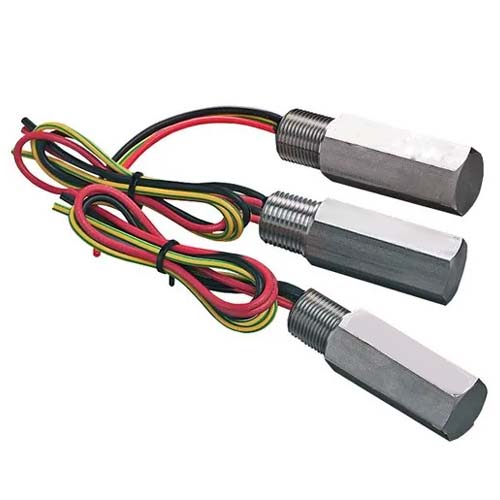
Tronsoft Technologies provides surge protection devices for instrumentation applications to help safeguard sensitive field instruments, signal circuits, and industrial control equipment against transient voltage disturbances. These devices are important in industrial environments where lightning-induced surges, electrical switching, and other transient events can affect instrumentation signals or damage connected equipment.
Designed for compatible industrial instrumentation circuits, surge protection devices can help protect process transmitters, sensors, analogue signal loops, and control-system interfaces. Tronsoft Technologies offers instrumentation protection solutions for applications in process industries, water treatment plants, power facilities, and other industrial installations.
Selecting the correct surge protection device requires consideration of the operating voltage, signal type, installation arrangement, grounding system, and the equipment being protected.
Surge Protection Devices (SPDs) for instrumentation are electrical protection components designed to limit transient overvoltages and divert surge energy away from sensitive equipment through an appropriate protection and grounding arrangement.
Industrial instrumentation systems commonly use transmitters and sensors to communicate measurements to PLCs, DCS systems, remote I/O modules, and monitoring equipment. A transient voltage entering through a field cable may affect these connected devices. A suitably selected and correctly installed SPD helps reduce this risk.
Instrumentation SPDs are available in different configurations for analogue signal loops, communication lines, and other instrument circuits. The device must match the electrical characteristics of the circuit and the protection requirements of the installation.
Suitable SPDs help limit transient overvoltages that could otherwise affect connected transmitters, sensors, and control-system interfaces. The protection level depends on the selected device and installation design.
Specific models are designed for compatible instrumentation signals, including 4–20 mA current loops. Signal type, operating voltage, wiring arrangement, and any communication requirements must be checked before selection.
Depending on the product design, surge protection can be installed near a field transmitter or at an appropriate signal interface. Placement should follow the manufacturer's installation instructions and the site's protection strategy.
Compatible signal SPDs can be used in instrumentation circuits connected to PLCs, DCS systems, remote I/O, and other control equipment. The complete circuit must remain within the permitted electrical limits.
Instrumentation protection products are available in various mounting and connection configurations. The appropriate design depends on the instrument, cable entry, available space, environmental conditions, and maintenance requirements.
The right device depends on the signal circuit and the equipment requiring protection.
These devices are intended for compatible analogue current loops used by industrial process transmitters. They help limit transient voltages affecting the signal circuit while preserving normal signal operation within the device's specifications.
Typical applications include pressure, differential pressure, level, flow, and other compatible transmitter loops.
Process transmitter SPDs are selected for the electrical and mechanical requirements of field instrumentation. Depending on the model, the protection device may support a particular transmitter connection or cable-entry arrangement.
Before installation, confirm the transmitter's operating voltage, signal type, connection dimensions, and required protection characteristics.
Industrial communication cables may require dedicated protection devices compatible with their interface and transmission characteristics. Examples include supported RS485 or other industrial communication circuits.
Communication SPDs must be selected for the specific interface and data requirements; a device designed for one signal type should not automatically be assumed suitable for another.
Signal and data SPDs are designed for the circuits and interfaces identified by their manufacturers. They can form part of a broader protection plan for industrial automation equipment, provided the voltage, signal, wiring, and grounding requirements are satisfied.
Instrumentation surge protection devices can be used in a variety of industrial environments where field signals and control equipment require protection from transient disturbances.
Water treatment plants: Protection planning for compatible process transmitters and instrumentation signal circuits.
Wastewater treatment plants: Support for protecting suitable measurement and control circuits.
Power generation facilities: Protection of compatible instrument signal lines in plant monitoring systems.
Oil and gas facilities: Use in suitable instrumentation circuits, subject to the required area classification and product approvals.
Process manufacturing plants: Protection planning for transmitter loops and control-system interfaces.
Pumping stations: Protection of compatible field instrumentation and monitoring circuits.
Industrial automation systems: Protection of selected signal connections between field instruments and control equipment.
Remote monitoring installations: Consideration of suitable SPDs where field cabling may be exposed to transient disturbances.
The final device selection must account for the site environment, grounding arrangements, circuit design, and applicable safety requirements.
A surge protection device helps control the effect of transient overvoltage on a connected circuit. Its operation depends on the internal protection technology and the device's specified application.
Normal operation: The connected transmitter or signal circuit operates within its normal electrical range.
Transient event: A surge may enter the circuit through field wiring because of lightning-induced effects or electrical switching.
Voltage limitation: The SPD responds according to its design to limit the transient voltage presented to the protected circuit.
Surge diversion: The protection arrangement directs surge current through its intended path, which may include a grounding connection.
Continued operation or inspection: The system may continue operating if the event remains within the protection capability. Following a significant surge, inspection or replacement may be necessary according to the manufacturer's instructions.
An SPD is not a guarantee against every surge or electrical fault. Effective protection depends on correct device selection, wiring, grounding, coordination with other protection measures, and installation quality.
Tronsoft's product page lists the following instrumentation surge protection device models:
TP48-N-NDI
TP48-I-NDI
TPAC-420-N
TP32-I-NDI
The page associates these products with Eaton/MTL. Confirm the exact model designation, current availability, technical documentation, and application compatibility with Tronsoft Technologies before ordering.
The specifications below should be confirmed for each model before publication or procurement.
| Parameter | What to Confirm |
|---|---|
| Product model | Exact model number and manufacturer |
| Circuit type | Analogue signal, 4–20 mA loop, or other supported circuit |
| Rated operating voltage | Manufacturer-specified continuous operating voltage |
| Maximum operating current | Permitted current for the intended circuit |
| Protection level | Specified residual or let-through voltage characteristics |
| Surge current rating | Rating and test waveform stated in the datasheet |
| Connection method | Terminal, cable gland, direct mount, or other specified connection |
| Mounting arrangement | Field, panel, DIN rail, or other approved installation |
| Grounding requirements | Recommended grounding and bonding arrangement |
| Environmental protection | Applicable enclosure or ingress protection rating |
| Hazardous-area approval | Applicable certification for the exact model, where required |
| Communication compatibility | Supported protocol and transmission characteristics, where applicable |
Do not assume that all listed models share the same ratings, approvals, mounting method, or operating characteristics. Use the exact manufacturer's datasheet for each product.
A correctly selected SPD helps reduce the risk that transient overvoltages will damage sensitive instrumentation and control-system interfaces.
Protecting suitable signal circuits can help reduce disruptions associated with electrical transients. Overall system reliability also depends on equipment quality, wiring, grounding, and maintenance.
Signal-compatible SPDs are designed to provide protection while allowing the intended signal to operate within specified limits. Incorrectly selected devices can affect the circuit, so compatibility is essential.
Suitable protection devices can form part of an industrial electrical and instrumentation protection strategy. Inspection and replacement should follow the product manufacturer's recommendations and the facility's maintenance procedures.
Signal-line protection should be considered alongside appropriate power protection, grounding and bonding, cable routing, and other site-specific protective measures.
Before purchasing an instrumentation SPD, evaluate the following points:
Identify the circuit: Determine whether protection is needed for a 4–20 mA loop, a communication line, or another instrument circuit.
Confirm the operating voltage: Select a device whose ratings are suitable for the circuit's normal and maximum operating conditions.
Check signal compatibility: Confirm that the SPD supports the transmitter, receiver, and any required communication functionality.
Review the installation location: Consider whether protection is needed near the field instrument, at the control panel, or at another cable interface.
Evaluate the grounding arrangement: Follow the manufacturer's instructions for grounding, bonding, and surge-current paths.
Check environmental requirements: Review temperature, moisture, dust, vibration, and enclosure requirements.
Verify hazardous-area requirements: For classified areas, confirm that the exact device and installation arrangement meet the applicable requirements.
Review product documentation: Check the model-specific datasheet, wiring diagram, ratings, approvals, and maintenance instructions.
These checks help ensure that the selected device is appropriate for the circuit and the intended operating environment.
Tronsoft Technologies supplies industrial instrumentation and automation products for process measurement and control applications. Its instrumentation surge protection product range includes listed Eaton/MTL model references for customers evaluating protection options for compatible industrial signal circuits.
When selecting an SPD, it is important to match the product to the application rather than relying only on its general category. Tronsoft Technologies can be contacted to discuss the intended signal type, operating voltage, transmitter model, installation arrangement, and technical documentation required for product evaluation.
For model availability and application enquiries, contact the Tronsoft Technologies team.
1. What is an instrumentation surge protection device?
It is a protective device designed to limit transient overvoltages and help protect compatible field instruments and signal circuits from surge-related damage.
2. Why is surge protection important for industrial instrumentation?
Industrial instruments are connected through cables that may experience transient disturbances. Suitable surge protection can help reduce the risk of damage or disruption to transmitters, signal interfaces, and control equipment.
3. Can an SPD be used with a 4–20 mA transmitter?
Yes, when the selected SPD is specifically compatible with the transmitter's current loop, operating voltage, wiring arrangement, and electrical requirements.
4. Where should an instrumentation SPD be installed?
The appropriate location depends on the circuit design, cable route, protected equipment, and manufacturer's instructions. Installation may be near a field instrument or at a suitable control-system interface.
5. Do all surge protection devices support RS485 communication?
No. The selected device must be specifically compatible with the communication interface and its electrical and transmission characteristics.
6. Does an SPD eliminate all electrical surge risks?
No. It helps limit certain transient overvoltages within its specified capability. Proper grounding, bonding, coordinated protection, wiring practices, and maintenance remain important.
7. What should be checked before buying an instrumentation SPD?
Check the operating voltage, signal type, surge ratings, protection level, installation method, grounding requirements, environmental suitability, and any required approvals.
8. Which instrumentation surge protection models are listed by Tronsoft Technologies?
The product page lists TP48-N-NDI, TP48-I-NDI, TPAC-420-N, and TP32-I-NDI. Confirm exact model specifications and availability with Tronsoft Technologies before procurement.
Contact Us
Feel Free To Get In Touch With Us
Office Address:
Karve road, near Garware metro stn, Pune | 411030 India
Follow Us:-
Looking For More?
Call Support 24x7
+91 7559349467