
Call Support 24x7
+91 7559349467
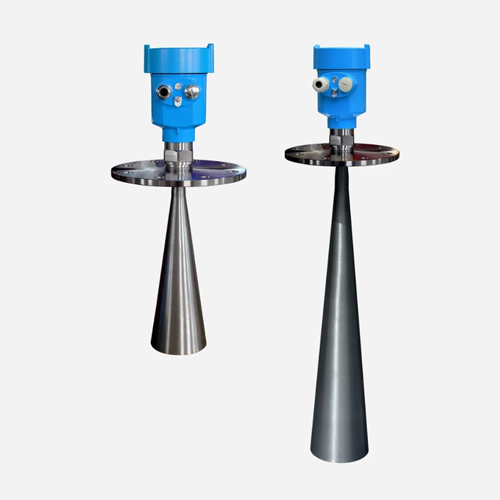
A Radar Level Transmitter is an industrial instrumentation device used to measure the level of liquids, slurries, and suitable solid materials inside tanks, silos, and storage vessels. It uses radar signals to determine the distance between the instrument and the material surface, enabling continuous level monitoring without direct contact with the measured medium.
Tronsoft Technologies offers radar level measurement solutions for industrial applications requiring dependable monitoring and process control. The radar level transmitter series listed by Tronsoft uses Frequency Modulated Continuous Wave (FMCW) radar technology operating in the 76–81 GHz frequency band.
Radar level transmitters are suitable for a wide range of industrial environments, including water treatment, chemical processing, pharmaceutical manufacturing, food and beverage production, and bulk material storage. The appropriate instrument depends on the material being measured, vessel dimensions, process conditions, installation arrangement, and required measurement range.
As a radar level transmitter manufacturer and supplier in Ghaziabad, Tronsoft Technologies provides industrial level measurement solutions for continuous process monitoring. Radar technology measures the distance to a material surface using reflected electromagnetic signals, making it suitable for applications where conventional contact-based instruments may be difficult to install or maintain.
The transmitter sends radar signals towards the material surface and receives the reflected signals. Its electronics process the return signal to determine the distance, which can be converted into a level measurement using the configured tank or vessel reference.
The 76–81 GHz FMCW radar technology used in the listed series supports focused measurement applications in industrial vessels. Actual performance depends on the instrument configuration, material properties, mounting position, vessel geometry, and process conditions.
Tronsoft Technologies supports customers in selecting suitable level measurement equipment for industrial storage, process automation, and monitoring applications.
Non-contact level measurement: Measures the material surface without requiring the sensor to be immersed in the process medium.
Continuous monitoring: Supports ongoing level measurement in compatible tanks, silos, and vessels.
Industrial versatility: Suitable configurations are available for liquid and solid material level applications.
Reduced direct-contact maintenance: Non-contact measurement avoids direct exposure of the sensing element to the measured material.
Compact radar technology: The 76–81 GHz frequency band can support focused measurement in appropriately designed installations.
Automation integration: Compatible transmitter outputs can connect to suitable industrial monitoring and control systems.
Application flexibility: Can be evaluated for water, wastewater, chemicals, oils, and bulk solids, subject to the selected model's compatibility.
Tronsoft Technologies supplies industrial instrumentation solutions for customers seeking radar level transmitters in Ghaziabad. These instruments can be considered for manufacturing plants, water treatment facilities, chemical processing units, storage terminals, and other industrial applications where reliable level monitoring is important.
Selecting a suitable radar level transmitter requires consideration of the measuring range, vessel height, material properties, operating temperature, pressure, and installation conditions. Internal obstructions, agitators, tank geometry, and the characteristics of the material surface can also influence the measurement.
For liquid applications, factors such as vapour, foam, turbulence, and condensation should be evaluated. For solid materials, the angle of repose, dust, uneven surfaces, and filling or discharge patterns may affect instrument selection and installation.
Tronsoft Technologies can assist customers in assessing these requirements and identifying a compatible radar level measurement solution for their process.
The following table highlights the technology identified for Tronsoft's radar level transmitter series. Confirm the complete product datasheet for the exact model before finalizing technical specifications.
| Parameter | Specification |
|---|---|
| Instrument Type | Radar Level Transmitter |
| Measurement Technology | FMCW radar |
| Operating Frequency | 76–81 GHz |
| Measurement Method | Non-contact radar measurement |
| Measured Parameter | Distance and material level |
| Typical Installation | Tanks, storage vessels, and suitable silos |
| Process Media | Compatible liquids, slurries, and solids, depending on model |
| Automation Integration | Depends on available transmitter outputs and control system compatibility |
| Measuring Range | Confirm the exact model datasheet |
| Accuracy | Confirm the exact model datasheet |
| Output Signal | Confirm the exact model datasheet |
| Process Temperature and Pressure | Confirm the exact model ratings |
| Enclosure Protection | Confirm the exact model datasheet |
Radar level transmitters are used in industries where continuous level monitoring helps manage material storage, process operations, and inventory.
Radar level measurement can be considered for compatible water storage tanks, process vessels, and other suitable installations. Continuous monitoring helps operators understand tank levels and coordinate water handling operations.
Suitable radar instruments can monitor liquid levels in compatible wastewater tanks and treatment vessels. Selection should account for foam, turbulence, vapour, and the operating environment.
Industrial effluent facilities can use level transmitters to monitor compatible storage and treatment vessels. The selected instrument should be appropriate for the liquid's chemical properties and process conditions.
Radar level transmitters can be used in suitable chemical storage tanks and process vessels. Compatibility with the chemical environment, vessel pressure, temperature, and installation requirements must be checked before selection.
Appropriately rated radar instruments can support level monitoring in compatible storage and process vessels. Applications involving hazardous areas require equipment with the relevant approvals and protection ratings.
Suitable radar level measurement systems can support liquid storage and process monitoring. Material compatibility, installation requirements, and applicable hygiene considerations should be evaluated.
Radar transmitters may be suitable for compatible ingredient storage, liquid tanks, and process vessels. Applications requiring hygienic design must use an appropriate instrument and process connection.
Suitable radar configurations can monitor material levels in silos and storage vessels containing compatible bulk solids. Dust, material surface characteristics, and filling conditions should be considered during selection.
Radar level measurement can support monitoring in suitable utility tanks, storage vessels, and industrial process systems where reliable level information is required.
A radar level transmitter operates by sending electromagnetic signals towards the surface of the material being measured and analyzing the reflected signals.
Step 1: Signal transmission
The transmitter emits radar signals towards the liquid or solid material surface.
Step 2: Echo reception
The instrument receives the reflected signals from the surface.
Step 3: Distance calculation
The electronics process the returned signal to determine the distance between the instrument and the material surface.
Step 4: Level measurement
The measured distance is converted into a level value using the configured reference point and vessel dimensions. Where supported, the result can be supplied to a compatible control or monitoring system.
Correct mounting, configuration, and selection of the measuring range are essential for dependable performance.
Tronsoft Technologies provides industrial instrumentation and automation solutions for process industries, utilities, and infrastructure applications. The company supports customers in evaluating instrumentation requirements and selecting appropriate solutions for their operating conditions.
Industrial instrumentation portfolio: Solutions across flow, level, pressure, temperature, and analytical measurement.
Application-based selection: Consideration of material properties, vessel geometry, measuring range, and process conditions.
Modern radar technology: Access to the listed 76–81 GHz FMCW radar transmitter series.
Automation compatibility: Support for evaluating suitable instruments for compatible industrial control systems.
Technical consultation: Assistance with identifying product requirements for industrial installations.
Pan-Ghaziabad support: Instrumentation solutions for industrial customers across Ghaziabad.
Whether you are planning a new storage installation or upgrading an existing level monitoring system, Tronsoft Technologies can help evaluate the appropriate radar level measurement solution for your application.
1. What is a radar level transmitter?
A radar level transmitter is an instrument that measures the level of a liquid or solid material by transmitting radar signals and analyzing their reflections from the material surface.
2. How does a radar level transmitter work?
The transmitter sends radar signals towards the material surface and receives the reflected signals. It calculates the distance to the surface and converts that measurement into a level value using the configured reference point.
3. What is the operating frequency of Tronsoft's radar level transmitter?
Tronsoft's website identifies its radar level transmitter series as FMCW radar operating in the 76–81 GHz frequency band. Confirm the exact model and its specifications with the manufacturer before purchase.
4. Where are radar level transmitters used?
Radar level transmitters are used in suitable water treatment, wastewater, chemical, pharmaceutical, food processing, oil and gas, power generation, and bulk material storage applications.
5. What is the difference between a radar and an ultrasonic level transmitter?
Radar transmitters use electromagnetic waves, whereas ultrasonic transmitters use sound waves. Radar measurement is often considered for applications where vapour, temperature variation, or other environmental conditions may affect ultrasonic measurements. Suitability depends on the specific instrument and process conditions.
6. Can a radar level transmitter measure solid materials?
Yes, suitable radar level transmitters can measure compatible bulk solids in silos and storage vessels. The correct model should be selected based on the material surface, dust conditions, measuring range, and installation geometry.
7. Can a radar level transmitter be connected to a PLC or SCADA system?
Yes, provided the selected transmitter has an output or communication interface compatible with the control system. Confirm the required signal type, wiring, and communication protocol before installation.
8. How do I select the right radar level transmitter?
Consider the maximum measuring distance, vessel dimensions, material type, operating temperature and pressure, mounting arrangement, obstructions, and required output signal. For hazardous or hygienic applications, verify the relevant certifications and process connection requirements.
9. How can I enquire about a radar level transmitter from Tronsoft Technologies?
Contact Tronsoft Technologies with your application details, including the material being measured, tank or silo dimensions, operating conditions, required measuring range, and preferred output signal. These details help determine a suitable instrument configuration.
Contact Us
Feel Free To Get In Touch With Us
Office Address:
Karve road, near Garware metro stn, Pune | 411030 India
Follow Us:-
Looking For More?
Call Support 24x7
+91 7559349467