
Call Support 24x7
+91 7559349467
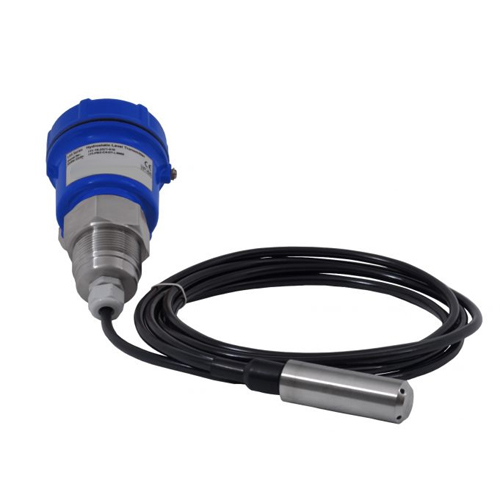
A Hydrostatic Level Transmitter is an industrial instrumentation device used to measure the level of a liquid by detecting the hydrostatic pressure generated by the liquid column. It converts the measured pressure into a level reading, allowing continuous monitoring of liquid levels in tanks, reservoirs, sumps, borewells, and other suitable installations.
Tronsoft Technologies offers hydrostatic level measurement solutions for industrial, commercial, and water management applications. These instruments are suitable for monitoring compatible liquids, including clean water, wastewater, and other liquids supported by the selected sensor materials and specifications.
Hydrostatic level transmitters are particularly useful for submerged measurement applications where continuous level monitoring is required. They can support industrial process control, water storage management, pump operation, and automation when configured with compatible monitoring and control equipment.
As a hydrostatic level transmitter manufacturer and supplier in Nagpur, Tronsoft Technologies provides instrumentation solutions for applications requiring dependable liquid level measurement. Hydrostatic measurement is based on the pressure exerted by a column of liquid, which increases with liquid depth.
A submerged hydrostatic level transmitter measures the pressure at its sensing point. The measured pressure is then converted into a level value using the liquid density and the instrument's configuration. For accurate measurement, the effects of liquid density, atmospheric pressure, tank pressure, and installation conditions must be considered where applicable.
Hydrostatic level transmitters can be installed in compatible water tanks, underground reservoirs, sumps, borewells, and industrial storage systems. The appropriate transmitter depends on the measurement range, liquid characteristics, operating conditions, sensor construction, and output requirements.
Tronsoft Technologies supports industrial instrumentation requirements with solutions that can be evaluated for integration into suitable PLC, SCADA, and process automation systems.
Continuous level measurement: Supports ongoing monitoring of liquid levels in suitable tanks, wells, reservoirs, and sumps.
Submerged measurement: Measures hydrostatic pressure at a selected depth within the liquid.
Wide application range: Suitable for compatible clean water, wastewater, and industrial liquids.
Automation compatibility: Models with compatible electrical outputs can connect to PLC, SCADA, and other monitoring systems.
Practical installation: Suitable submersible designs can be installed in locations where top-mounted measurement may be inconvenient.
Reduced moving-part requirements: Pressure-based sensing does not require mechanical floats to track changing liquid levels.
Process monitoring support: Can help operators monitor water storage, tank levels, and pumping operations.
Tronsoft Technologies supplies hydrostatic level measurement solutions for customers seeking industrial level monitoring equipment in Nagpur. These instruments can be considered by water treatment facilities, wastewater plants, industrial manufacturers, infrastructure contractors, pumping station operators, and engineering system integrators.
Selecting the right hydrostatic level transmitter involves evaluating the maximum liquid depth, liquid density, required measurement range, sensor installation position, operating temperature, and output signal. The sensor's pressure rating and material compatibility should also be checked against the intended application.
For open or vented tanks, the measurement arrangement may use a vented reference to account for atmospheric pressure. For sealed or pressurized vessels, the appropriate pressure reference and instrument configuration must be considered.
Tronsoft Technologies can assist customers in evaluating these requirements and selecting a suitable hydrostatic level measurement solution for their installation.
The final specifications depend on the selected transmitter model and its intended application. The following parameters should be reviewed before selecting a suitable instrument.
| Parameter | Specification / Selection Criteria |
|---|---|
| Instrument Type | Hydrostatic Level Transmitter |
| Measurement Principle | Hydrostatic pressure measurement |
| Measurement Method | Submerged liquid pressure measurement |
| Measured Parameter | Liquid level derived from hydrostatic pressure |
| Typical Applications | Tanks, reservoirs, sumps, borewells, and water systems |
| Process Medium | Compatible liquids, subject to sensor material compatibility |
| Measuring Range | Select according to maximum liquid depth |
| Output Signal | Confirm the selected model datasheet |
| Accuracy | Confirm the selected model datasheet |
| Wetted Materials | Confirm according to the selected sensor |
| Operating Temperature | Confirm the selected model ratings |
| Pressure Rating | Confirm the selected model datasheet |
| Protection Rating | Confirm the selected model datasheet |
| Automation Integration | Depends on available output and control system compatibility |
Hydrostatic level transmitters are used in applications where measuring the pressure of a liquid column provides a practical way to determine liquid depth.
Water treatment plants can use hydrostatic level transmitters to monitor compatible water storage tanks, collection chambers, reservoirs, and process vessels. Continuous level information can help operators manage storage and coordinate water transfer operations.
Suitable hydrostatic transmitters can monitor liquid levels in wastewater collection tanks, sumps, and treatment systems. Sensor materials and construction should be selected according to wastewater characteristics and the installation environment.
Industrial effluent facilities can use compatible hydrostatic level measurement instruments in collection tanks and treatment vessels. Chemical compatibility, suspended solids, and the expected operating conditions should be evaluated before selection.
Submersible hydrostatic level transmitters can be used to monitor water levels in suitable borewells and wells. The measurement range, submersion depth, cable length, and protection rating should be appropriate for the installation.
Hydrostatic level measurement can help monitor water stored in underground tanks and reservoirs where visual inspection is difficult. The transmitter provides level information that can be used by compatible monitoring systems.
Manufacturing plants can use hydrostatic level transmitters to monitor compatible liquids in storage tanks and process vessels. The selected instrument must account for liquid density and any vessel pressure conditions that affect the measurement.
Hydrostatic transmitters can support liquid level monitoring in pumping stations and collection sumps. When connected to a suitable control system, the level signal may be used to support pump control, alarms, and operational monitoring.
Hydrostatic level measurement can help monitor water levels in suitable storage reservoirs and distribution systems, supporting water management and pumping operations.
Suitable hydrostatic transmitters can monitor compatible industrial liquids where the sensing materials, pressure range, and operating conditions meet the process requirements.
A hydrostatic level transmitter determines liquid level by measuring the pressure generated by the liquid column above its sensing point.
Step 1: Pressure detection
The submerged sensing element detects the pressure exerted by the liquid at its installation depth.
Step 2: Pressure conversion
The transmitter converts the detected pressure into an electrical measurement signal.
Step 3: Level calculation
The liquid level is calculated from the measured pressure using the liquid density and the applicable reference pressure.
Step 4: Signal transmission
The transmitter provides a signal to compatible monitoring or control equipment, depending on the model's available output.
The underlying relationship for a liquid column is:
Hydrostatic pressure = liquid density × gravitational acceleration × liquid height.
This relationship means that liquid density is an important factor in hydrostatic level measurement. A change in density can affect the calculated level if the instrument configuration does not account for it.
Tronsoft Technologies provides industrial instrumentation and automation solutions for water management, manufacturing, process industries, and infrastructure applications.
Industrial instrumentation expertise: Solutions for flow, pressure, level, temperature, and process measurement.
Application-based selection: Guidance on choosing a suitable measuring range, sensor design, and output configuration.
Water and wastewater applications: Instrumentation options for compatible storage, treatment, and pumping systems.
Automation integration: Support for evaluating instruments for compatible PLC, SCADA, and process control systems.
Technical consultation: Assistance in reviewing application requirements and instrument compatibility.
Pan-Nagpur supply support: Assistance for industrial instrumentation requirements across Nagpur.
Whether you are monitoring a borewell, underground water tank, industrial sump, or process vessel, Tronsoft Technologies can help evaluate a suitable hydrostatic level measurement solution for your application.
1. What is a hydrostatic level transmitter?
A hydrostatic level transmitter measures the pressure generated by a column of liquid and converts that pressure into a liquid level measurement. It is commonly used in tanks, reservoirs, sumps, and other compatible liquid storage applications.
2. How does a hydrostatic level transmitter work?
The transmitter measures pressure at a known depth below the liquid surface. The measured pressure is converted into level using the liquid density, gravitational acceleration, and the appropriate pressure reference.
3. Where are hydrostatic level transmitters used?
They are used in water treatment plants, sewage treatment plants, effluent treatment facilities, borewells, reservoirs, underground tanks, pumping stations, and compatible industrial process applications.
4. Can a hydrostatic level transmitter measure water in a borewell?
Yes. A suitable submersible hydrostatic level transmitter can monitor water levels in a borewell. The measuring range, sensor design, submersion depth, cable length, and protection rating should match the installation requirements.
5. What is the difference between a hydrostatic and radar level transmitter?
A hydrostatic transmitter determines liquid level from pressure measured within the liquid. A radar transmitter measures distance to the material surface using electromagnetic waves. Hydrostatic measurement requires contact with the liquid, while radar level measurement is generally non-contact.
6. Can a hydrostatic level transmitter be connected to a PLC or SCADA system?
Yes, when the selected model provides an output compatible with the control system. Confirm the output signal, wiring arrangement, and interface requirements before installation.
7. Does liquid density affect hydrostatic level measurement?
Yes. Hydrostatic pressure depends on both liquid density and liquid height. If the density differs from the value used for configuration, the calculated level may be affected.
8. How do I select the right hydrostatic level transmitter?
Consider the maximum liquid depth, liquid density, required accuracy, sensor materials, operating temperature, pressure conditions, cable length, and output signal. For sealed or pressurized vessels, also confirm the required pressure reference and installation arrangement.
9. How can I enquire about a hydrostatic level transmitter from Tronsoft Technologies?
Contact Tronsoft Technologies with your application details, including the liquid type, tank or borewell depth, operating conditions, required measuring range, and output requirements. These details help identify a suitable transmitter configuration.
Contact Us
Feel Free To Get In Touch With Us
Office Address:
Karve road, near Garware metro stn, Pune | 411030 India
Follow Us:-
Looking For More?
Call Support 24x7
+91 7559349467