

Call Support 24x7
+91 7559349467
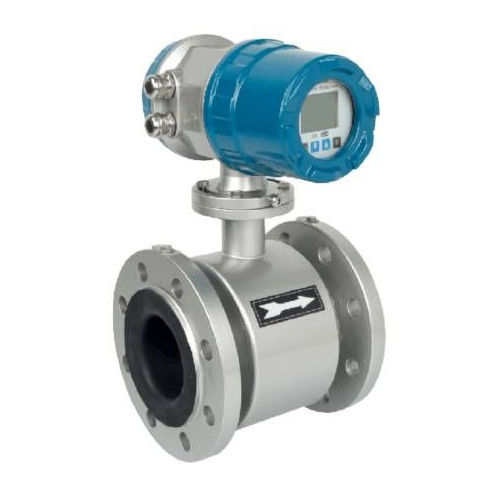
Tronsoft Technologies manufactures and supplies electromagnetic flow meters in Pune from our own works on Karve Road, near Garware Metro Station — which means site visits, sizing consultations, and after-sales support across Pune's industrial belt don't wait on a courier or an out-of-city engineer's travel schedule. Our meters work on the principle of Faraday's Law of electromagnetic induction: a conductive fluid moving through a magnetic field generates a voltage proportional to its velocity, which is why electromagnetic flow meters (magmeters) have no moving parts to wear out and hold calibration over years of continuous industrial duty.
We've been manufacturing and supplying instrumentation since 2017 as an ISO 9001:2015 certified company under founder Satyajit Kulkarni, drawing on Tronsoft's 10+ years of active industry engagement and a 30-year legacy in Indian instrumentation through partner brands including Krohne Marshall (Forbes Marshall), ABB, and Pune Techtrol. Being based in Pune itself — rather than serving the city from a Mumbai or Gujarat office, as several competitors do — is a practical advantage for plants in Chakan, Bhosari, Hinjewadi, Ranjangaon, Talegaon, and the Pimpri-Chinchwad MIDC belt that need fast turnaround on commissioning support, not a multi-day wait.
An electromagnetic flow meter measures the flow rate of electrically conductive liquids — water, wastewater, acids, alkalis, slurries, and most process chemicals — but cannot measure oils, gases, or deionized water, since these lack the conductivity needed to generate a Faraday signal. Two electrodes mounted in the flow tube pick up the induced voltage, which is directly proportional to average flow velocity, independent of the liquid's density, viscosity, or pressure — giving magmeters long-term accuracy stability that mechanical and differential-pressure meters can't match over years of continuous use.
Choosing the right unit is a combination of eight factors assessed together, not a single spec decision:
Getting any one of these wrong — undersized bore, incompatible liner, a protocol your SCADA can't read — is the single most common cause of "the flow meter isn't reading right" service calls we get across Pune's industrial estates. It's also why we configure each unit against the application rather than selling a fixed catalog model.
As an Electromagnetic Flow Meter Manufacturer in Pune, we don't ship a single generic model — each unit is configured against the application before it leaves the works, covering liquid conductivity, pipe diameter, pressure and temperature rating, liner material (PTFE, PFA, hard rubber, neoprene), electrode material (SS316, Hastelloy, Titanium, Tantalum), and output protocol (4-20 mA, pulse, RS485, Modbus RTU). Every unit is built and tested under our ISO 9001:2015 quality management system before dispatch, with accuracy up to ±0.5% and a flow velocity range of 0.1 to 10 m/s.
|
Parameter |
Specification |
|
Brand |
Tronsoft |
|
Accuracy |
Up to ±0.5% |
|
Pipe Size Range |
DN15 to DN2000 |
|
Flow Velocity Range |
0.1 to 10 m/s |
|
Liner Material |
PTFE, PFA, Hard Rubber, Neoprene |
|
Electrode Material |
SS316, Hastelloy, Titanium, Tantalum |
|
Output Signal |
4-20 mA, Pulse, RS485, Modbus RTU |
As an Electromagnetic Flow Meter Supplier in Pune, our role doesn't stop at delivery. We work directly with EPC contractors, OEMs, panel builders, and plant operators across Pune and its surrounding industrial estates, supporting sizing and selection based on actual process conditions, site-specific installation guidance (straight-run requirements, grounding, electrode orientation), wiring and commissioning support during startup, and post-installation troubleshooting for signal drift, empty-pipe detection, or SCADA integration issues. Because our team is based in Pune, this support typically means a same-day or next-day site visit rather than a scheduled multi-day dispatch — a meaningful difference during a commissioning window or an unplanned shutdown.
Additional sectors we serve across Pune and neighbouring industrial belts:
For plants running turnkey electrical and instrumentation automation, our meters integrate directly into the Turnkey E&I Projects we execute, including WTP/STP/ETP automation and pumping station automation.
Pune's manufacturing base — dense, multi-shift, and running on tight uptime margins — is a big part of why electromagnetic flow meters have replaced mechanical and differential-pressure meters as the default choice across the city's process industries. There are no moving parts to wear down under continuous multi-shift operation, no obstruction in the flow path to cause pressure drop or clogging with slurries and effluents, and the accuracy holds over years without the recalibration drift mechanical meters develop. For a plant weighing options, choosing an Electromagnetic Flow Meter in Pune over older metering technology usually comes down to lower long-term maintenance cost and fewer unplanned shutdowns — both of which matter more in a high-utilization manufacturing hub like Pune than in a lower-throughput setup.
A sample of the kind of installations we've configured electromagnetic flow meters for in and around Pune:
These are representative of recent project scope rather than a full client list; specific site names and figures are withheld under client confidentiality, and real references can be shared during a quote discussion.
Whether you need an Electromagnetic Flow Meter in Pune for a new installation, an Electromagnetic Flow Meter Manufacturer in Pune you can configure a unit with directly, or an Electromagnetic Flow Meter Supplier in Pune for an ongoing plant expansion, Tronsoft Technologies covers all three from a single Pune-based point of contact — reach out for a site-specific quote.
Who is a reliable electromagnetic flow meter manufacturer in Pune?
Tronsoft Technologies, headquartered on Karve Road, Pune, has manufactured and supplied electromagnetic flow meters since 2017. The company is ISO 9001:2015 certified and led by founder Satyajit Kulkarni, with instrumentation partnerships including Krohne Marshall (Forbes Marshall) and ABB.
What accuracy does an electromagnetic flow meter deliver?
Up to ±0.5%, suitable for continuous industrial and municipal flow monitoring where long-term measurement drift is a concern.
What pipe sizes are supported?
DN15 to DN2000, configured to match your existing pipeline and flow velocity requirements (0.1 to 10 m/s).
What liquids can an electromagnetic flow meter measure?
Any electrically conductive liquid — water, wastewater, acids, alkalis, and most process chemicals. It cannot measure oils, gases, or non-conductive fluids, since the technology relies on Faraday's Law of electromagnetic induction.
Do electromagnetic flow meters need straight pipe runs before and after installation?
Yes — most magmeters need roughly 5 diameters of straight pipe upstream and 2-3 diameters downstream for accurate readings; our team confirms exact requirements during site sizing.
Can the meter output integrate with existing SCADA or PLC systems?
Yes, our meters support 4-20 mA, pulse, RS485, and Modbus RTU output for direct integration into PLC, SCADA, or DCS-based automation.
How fast can you support a site in Pune if there's an issue?
Because our office and works are based in Pune, most sites across the city and neighbouring industrial estates (Chakan, Bhosari, Hinjewadi, Talegaon, Ranjangaon) can get a same-day or next-day visit, rather than waiting on a scheduled multi-day dispatch from an out-of-city supplier.
Is an electromagnetic flow meter in Pune suitable for every application?
Not every one — it's the right fit for electrically conductive liquids like water, wastewater, and most process chemicals, but not for oils, gases, or non-conductive fluids. Beyond that, an Electromagnetic Flow Meter in Pune installation is suitable for nearly all conductive-liquid metering across water treatment, effluent handling, chemical processing, and coolant circuits — our team confirms fit during the sizing consultation.
Contact Us
Feel Free To Get In Touch With Us
Office Address:
Karve road, near Garware metro stn, Pune | 411030 India
Follow Us:-
Looking For More?
Call Support 24x7
+91 7559349467