
• Electromagnetic Flow Meter in Mumbai

    Home Electromagnetic Flow Meter in Mumbai
    Electromagnetic Flow Meter in Mumbai

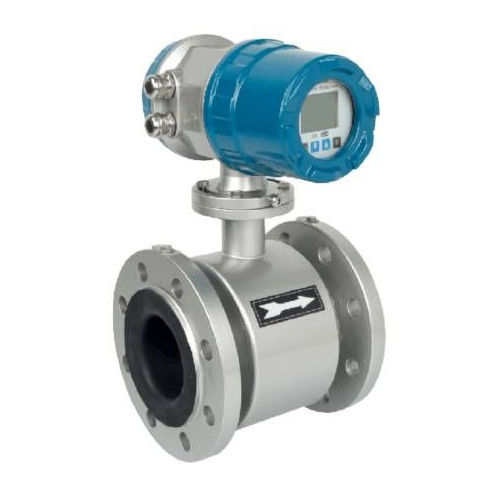
    Tronsoft Technologies supplies a reliable electromagnetic flow meter in Mumbai, engineered for industries across Maharashtra where continuous, real-time liquid measurement is critical to process control. Our meters — also called mag meters — apply Faraday's Law of Electromagnetic Induction to measure conductive liquids with no moving parts, no pressure drop, and long-term measurement stability. As an ISO 9001:2015 certified company operating since 2017, we support flow measurement projects across Mumbai, Navi Mumbai, Thane, and the broader Maharashtra industrial corridor, with accuracy up to ±0.5% across a DN15 to DN2000 pipe size range.
     

    This page covers everything you need before buying one: full specifications, how to select the right unit for your application, how it compares to other flow meter technologies, installation and maintenance basics, and where our support team is active across Maharashtra.
     

    Electromagnetic Flow Meter Manufacturer in Mumbai


    As an electromagnetic flow meter manufacturer in Mumbai, our engineering process starts with the application, not the catalogue. Each unit is configured against liquid conductivity, pipe diameter, operating pressure, liner compatibility, and electrode material before it's built — a mag meter sized for clean water performs very differently from one built for effluent or slurry. Units go through factory testing and calibration under an ISO 9001:2015 quality system before dispatch, so plants across Mumbai and Maharashtra get a flow meter engineered for their actual process conditions, not a generic off-the-shelf unit.
     

    Technical Specifications


    Parameter

    Specification

    Brand

    Tronsoft

    Measurement Principle

    Faraday's Law of Electromagnetic Induction

    Accuracy

    Up to ±0.5%

    Pipe Size Range

    DN15 to DN2000

    Flow Velocity Range

    0.1 to 10 m/s

    Minimum Conductivity

    5 µS/cm (20 µS/cm for demineralised water)

    Liner Options

    PTFE, PFA, Hard Rubber, Neoprene

    Electrode Options

    SS316, Hastelloy, Titanium, Tantalum

    Output Signal

    4-20 mA, Pulse, RS485, Modbus RTU

    Power Supply

    220V AC / 24V DC (model-dependent)

    Operating Temperature

    Up to 80°C (standard liner); higher with PTFE and adjusted electronics

    Pressure Rating

    Up to 10 kg/cm² (model and flange dependent)

    Protection Class

    IP67 (Transmitter) / IP68 (Sensor, optional)

    Display

    Integral or remote LCD, flow rate and totaliser


    How to Select the Right Electromagnetic Flow Meter


    Choosing the correct electromagnetic flow meter comes down to seven variables. Getting any one of these wrong is the most common reason a flow meter under-performs or fails early in the field.
     

    • Pipe Size: The meter's bore should match your pipeline's nominal diameter. Undersizing increases velocity and wear; oversizing reduces measurement resolution at low flow rates. We size units from DN15 up to DN2000.
    • Liquid Conductivity: Electromagnetic flow meters only work on conductive liquids — a minimum conductivity of roughly 5 µS/cm is required (raised to around 20 µS/cm for demineralised or very pure water). Oils, gases, and most hydrocarbons are not measurable with this technology; an ultrasonic or turbine meter is the better fit there.
    • Operating Temperature: Standard liners handle up to 80°C; PTFE-lined units with adjusted electronics can go higher. Confirm your process temperature before finalising the liner.
    • Operating Pressure: Flange rating and liner thickness both need to match your line pressure — this is a common oversight when a meter is bought off a catalogue photo rather than sized to spec.
    • Flow Range: We size to your minimum and maximum flow rate, not just your average — a meter accurate at peak flow but noisy at low flow will give you unreliable totalisation over a full shift.
    • Liner Selection: We typically recommend PTFE liners for aggressive chemical applications because they hold up well against corrosion over long operating periods. Hard rubber and neoprene are more cost-effective choices for water, wastewater, and general industrial use where the liquid isn't chemically aggressive.
    • Electrode Selection: SS316 covers most water and mild chemical applications. Hastelloy, titanium, and tantalum electrodes are used where the liquid is more aggressive — strong acids, alkalis, or high-chloride-content streams.
       

    Electromagnetic Flow Meter vs. Other Flow Meter Types


    Buyers often compare electromagnetic technology against turbine, vortex, ultrasonic, and rotameter options. Here's how they stack up:
     

    Type

    Moving Parts

    Conductive Liquids Only

    Accuracy

    Best Fit

    Electromagnetic

    None

    Yes

    Up to ±0.5%

    Water, wastewater, chemicals, slurries

    Turbine

    Yes (rotor)

    No

    ±0.5–1%

    Clean, low-viscosity liquids

    Vortex

    None

    No

    ±1%

    Steam, gases, clean liquids

    Ultrasonic

    None

    No

    ±1–2% (clamp-on)

    Non-conductive liquids, retrofit installs

    Rotameter

    Yes (float)

    No

    ±2–5%

    Low-cost visual indication, low pressure


    The electromagnetic flow meter's advantage over a turbine or rotameter is the absence of moving parts — no bearing wear, no maintenance downtime, and no accuracy drift from mechanical fatigue. Against ultrasonic meters, electromagnetic units generally hold tighter accuracy on conductive liquids, though ultrasonic (clamp-on) is often the better choice when you cannot cut into an existing pipeline. Vortex meters remain the stronger choice for steam or gas measurement, where electromagnetic technology doesn't apply at all.
     

    Electromagnetic Flow Meter Installation Guidelines


    Correct installation affects accuracy as much as correct sizing does. Key points our engineers check on every commissioning:
     

    • Straight pipe length: Maintain at least 5 diameters of straight pipe upstream and 3 diameters downstream of the meter, free of valves, bends, or reducers, to let the flow profile stabilise.
    • Grounding rings: Required when the pipeline is non-conductive (PVC, GRP, or lined pipe) or ungrounded, so the signal has a proper reference to earth.
    • Full pipe condition: The meter must always be flooded — a partially full pipe reads inaccurately or can trigger empty-pipe alarms. During commissioning at wastewater treatment plants, our engineers regularly run into partially filled pipelines causing unstable readings — ensuring a continuously full pipe is one of the simplest fixes for measurement accuracy, and one of the first things we check on-site before assuming it's an equipment fault.
    • Air bubbles: Entrained air distorts the electromagnetic signal; install away from pump suction points or high points where air can pocket.
    • Vertical installation: Preferred where the liquid carries suspended solids, since upward flow keeps the pipe naturally full.
    • Horizontal installation: Acceptable for most clean liquid applications, provided the electrode axis is kept horizontal to avoid air pockets at the top of the pipe.
       

    Electromagnetic Flow Meter Maintenance Tips


    Electromagnetic flow meters need far less maintenance than mechanical alternatives, but a few checks keep long-term accuracy intact:
     

    • Electrode cleaning: Periodic inspection prevents coating build-up on the electrodes from fats, scale, or sediment. In effluent applications especially, we've seen electrode fouling build up gradually enough that operators mistake it for sensor drift rather than a cleaning issue — a quick inspection usually resolves it.
    • Calibration checks: Recommended periodically (annually is typical for most industrial applications) against a reference standard, particularly for billing-grade or regulatory measurement.
    • Empty-pipe detection: Most of our units include this as a built-in alarm — worth testing during routine maintenance to confirm it's still triggering correctly.
    • Sensor inspection: Check liner condition and flange gasket integrity during scheduled shutdowns to catch wear before it becomes a failure.
       

    Industries in Maharashtra Using Electromagnetic Flow Meters


    • Water Treatment and Municipal Supply: Used for bulk water metering, distribution monitoring, and billing-grade measurement in WTP and municipal supply networks across Mumbai and Maharashtra's urban water boards.
    • Sewage and Effluent Treatment (STP/ETP): Measures influent and treated effluent flow where the liquid often carries suspended solids — a condition that damages mechanical meters but doesn't affect electromagnetic measurement.
    • Chemical Industry: Used for measuring acids, alkalis, and solvents, where corrosion resistance and accuracy are essential — liner and electrode material are selected specifically against the chemical being handled.
    • Pharmaceutical Manufacturing: Applied in purified water and process liquid lines, where hygienic construction and consistent accuracy support regulatory documentation requirements.
    • Food and Beverage Processing: Common in dairy, beverage bottling, and CIP (clean-in-place) lines, where hygienic liner materials and reliable low-flow accuracy matter.
    • Textile and Dyeing Units: Used to monitor dye liquor and process water flow, common across the textile clusters in Bhiwandi and the surrounding Thane district.
    • Sugar and Distillery Operations: Measures process liquid and effluent flow in sugar mills and distilleries across Maharashtra's industrial sugar belt.
    • Power Generation: Used in cooling water and process water circuits at power plants, where continuous, maintenance-light measurement reduces unplanned downtime.
    • Steel and Mining: Applied to slurry and process water lines where abrasive solids content would quickly wear out a mechanical meter.
       

    We regularly support installations across Maharashtra's key industrial belts — including Taloja MIDC, Rabale, TTC Industrial Area, Mahape, and Bhiwandi for chemical and process industries; Dombivli MIDC and Ambernath MIDC for textile and process manufacturing; and Vasai and Palghar for water treatment and municipal projects. If your facility sits in the Andheri Industrial Estate or elsewhere in Mumbai proper, our team can quote and support you directly.
     

    Why Choose Tronsoft


    • Factory Testing: Every unit is tested before it leaves our facility, not just on the customer's line
    • Calibration: Units are calibrated against reference standards as part of standard quality control
    • Quality Inspection: ISO 9001:2015 certified process, with inspection checkpoints from build through dispatch
    • Installation Support: Our engineers assist with site sizing, grounding, and commissioning
    • Spare Parts Availability: Electrodes, liners, and transmitter components stocked for fast replacement
    • Warranty: Standard warranty coverage on manufacturing defects
    • Fast Delivery: Dispatch and delivery coordinated across Mumbai and Maharashtra without long lead times
    • Technical Engineers on Call: Direct access to engineering support for sizing questions and troubleshooting, not a generic call centre
       

    Support Across Mumbai and Maharashtra


    • Delivery: Coordinated dispatch and logistics for sites across Mumbai, Navi Mumbai, Thane, and the wider MMR
    • Technical Support: Engineers available for sizing questions, installation guidance, and troubleshooting for clients across Maharashtra
    • Contact: Reach our team directly via the Contact Us page for a technical consultation or quote
       

    Beyond the Flow Meter: Process Automation Support


    An electromagnetic flow meter is one part of a larger measurement and control setup. Our flow sensors integrate with flow transmitters and flow converters for signal processing, and connect directly into PLC, SCADA, and DCS systems for process automation. For clients building out broader industrial instrumentation, water management, or utility monitoring systems, we support the full measurement chain — not just the sensor at the pipe.
     

    Why Request a Quote


    • Custom Configurations Available: Liner, electrode, and output signal matched to your exact process, not a fixed catalogue spec
    • OEM Support: Volume pricing and technical documentation for OEMs building flow measurement into their own equipment
    • Bulk Orders: Coordinated delivery for multi-site or multi-unit projects across Maharashtra
    • Technical Consultation: Talk to an engineer before you buy — sizing and liner selection are free to discuss, no obligation
       

    Frequently Asked Questions


    Which industries use electromagnetic flow meters in Mumbai? 

    Water treatment, sewage and effluent treatment, chemical processing, pharmaceuticals, food and beverage, textiles, sugar and distillery, power generation, and steel/mining are the most common users across Mumbai and Maharashtra.
     

    How do I choose the correct pipe size? 

    Match the meter bore to your pipeline's nominal diameter, then confirm it against your actual minimum and maximum flow rate — not just the pipe size on paper. Our engineers can size this from your process data.
     

    Which liner material should I select? 

    PTFE or PFA for corrosive or high-purity liquids; hard rubber or neoprene for water, wastewater, and general industrial use where cost matters more than chemical resistance.
     

    Can it measure wastewater? 

    Yes — this is one of the most common applications, since electromagnetic meters have no moving parts to foul or wear from suspended solids.
     

    Can it measure slurry? 

    Yes, provided the slurry carries enough electrical conductivity and the liner/electrode combination is chosen to handle the abrasive content.
     

    What's the minimum conductivity required? 

    Roughly 5 µS/cm for standard liquids, rising to around 20 µS/cm for demineralised or very pure water.
     

    What accuracy can I expect? 

    Up to ±0.5%, suitable for continuous industrial monitoring and billing-grade municipal water measurement.
     

    What pipe sizes are supported? 

    DN15 to DN2000, configured against your specific application.
     

    How does an electromagnetic flow meter work? 

    It applies Faraday's Law of Electromagnetic Induction: a magnetic field is generated across the pipe, and as conductive liquid flows through it, a voltage is induced that's directly proportional to flow velocity. Electrodes pick up this voltage, and the transmitter converts it into a flow reading.
     

    Do you provide installation and after-sales support in Mumbai? 

    Yes — technical consultation, installation and wiring support, commissioning assistance, and after-sales troubleshooting for clients across Mumbai and Maharashtra.

    Contact Us

    Feel Free To Get In Touch With Us

    Office Address:

    Karve road, near Garware metro stn, Pune | 411030 India

    Follow Us:-

    Looking For More?

    Book an Appointemt

    Call Support 24x7

    +91 7559349467
    Call Us Icon WhatsApp  Icon