
Call Support 24x7
+91 7559349467
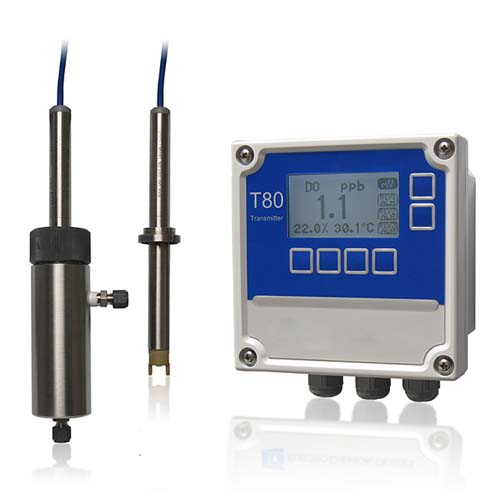
A Dissolved Oxygen Transmitter, also known as a DO Analyzer, is an analytical instrument used to measure the amount of oxygen dissolved in water or another suitable liquid. Dissolved oxygen measurement is important in water treatment, wastewater treatment, aquaculture, environmental monitoring, and industrial processes where oxygen levels affect treatment efficiency, water quality, or process performance.
A dissolved oxygen measurement system generally consists of a compatible DO sensor and an analyzer or transmitter that processes the sensor signal. Depending on the instrument configuration, the measured value may be displayed locally or transmitted to a compatible monitoring and control system.
Tronsoft Technologies offers industrial instrumentation and water-quality measurement solutions for industrial and utility applications. Our Dissolved Oxygen Transmitter DO Analyzer product offering is intended for customers seeking dissolved oxygen monitoring solutions. Contact our team to confirm the available model, sensor technology, measurement range, output options, and installation requirements for your application.
As a Dissolved Oxygen Transmitter Manufacturer in Karnataka, Tronsoft Technologies supports industrial customers looking for instrumentation to monitor dissolved oxygen in water and suitable process liquids.
Dissolved oxygen, commonly abbreviated as DO, refers to oxygen present in water in dissolved form. Its concentration can influence biological treatment processes, aquatic life, and selected industrial operations. Monitoring DO levels helps operators understand process conditions and make informed decisions about aeration, treatment performance, and water quality.
A dissolved oxygen analyzer works with a compatible sensor to determine the oxygen concentration in the measured liquid. The sensor technology, calibration method, operating range, and maintenance requirements depend on the selected instrument. Different applications may require different sensor designs because of variations in water composition, temperature, pressure, fouling potential, and process conditions.
When selecting a DO transmitter, it is important to consider the intended application, expected oxygen concentration, sensor technology, required output signal, installation method, and compatibility with the receiving control system.
Tronsoft Technologies provides industrial instrumentation solutions for water and wastewater treatment, manufacturing, utilities, and other process industries. Contact our team to discuss the measurement requirements of your facility.
A DO analyzer measures dissolved oxygen using a compatible sensor. The measurement helps operators monitor oxygen levels in water-treatment systems, industrial processes, and other suitable applications.
Dissolved oxygen is an important water-quality parameter. Changes in oxygen concentration can provide useful information about water conditions and the performance of selected treatment processes.
In biological wastewater treatment, dissolved oxygen monitoring helps operators assess oxygen availability for aerobic microorganisms. Appropriate monitoring can support decisions about aeration and process operation.
Depending on the model's available outputs, a DO transmitter can provide measurement data to compatible indicators, PLCs, SCADA systems, or other monitoring equipment.
Different DO sensor technologies have different operating characteristics and maintenance requirements. Selecting a sensor suitable for the process helps support reliable measurements.
Continuous or periodic dissolved oxygen monitoring can help operators identify changes in process conditions and evaluate whether oxygen levels remain within the required operating range.
A suitable analyzer can form part of a wider water-quality monitoring arrangement. Integration options depend on the instrument's electrical outputs, communication features, and control-system requirements.
As a Dissolved Oxygen Analyzer Supplier in Karnataka, Tronsoft Technologies supports industrial users, water-treatment contractors, system integrators, OEMs, consultants, and plant maintenance teams seeking analytical instrumentation.
Selecting the right dissolved oxygen analyzer requires an understanding of the liquid, process conditions, measurement range, and intended use. For example, a wastewater treatment plant may need to monitor oxygen levels in an aeration tank, while an aquaculture facility may need to monitor dissolved oxygen to help maintain suitable conditions for aquatic organisms.
The sensor technology is another important consideration. Optical and electrochemical sensors operate differently and can have different calibration, maintenance, and operating requirements. The appropriate technology depends on the application and the specific product available.
Before ordering, confirm the measurement range, sensor technology, process temperature, installation arrangement, output signal, power requirements, maintenance procedure, and compatibility with your monitoring or automation system.
Tronsoft Technologies offers industrial instrumentation and process automation solutions for a range of industrial and utility applications. Contact our team to discuss your DO measurement requirements and confirm the relevant product specifications.
Technical specifications depend on the exact product model and sensor configuration. Confirm the following details against the official datasheet before publishing specifications or placing an order.
| Parameter | Specification to confirm |
|---|---|
| Product type | Dissolved Oxygen Transmitter / DO Analyzer |
| Measurement parameter | Dissolved oxygen |
| Measurement range | Confirm the available range for the model |
| Measurement units | Confirm supported units, such as mg/L or percentage saturation |
| Sensor technology | Verify whether optical, electrochemical, or another sensor type is supported |
| Sensor compatibility | Confirm the compatible probe or sensor model |
| Temperature measurement | Confirm whether temperature compensation or a temperature input is supported |
| Output signal | Verify the available analog or digital outputs |
| Communication | Confirm whether a communication protocol is available |
| Display | Verify whether a local display is provided |
| Power supply | Refer to the product datasheet |
| Mounting | Confirm panel, wall, field, or other installation options |
| Process conditions | Verify permitted temperature, pressure, and liquid compatibility |
| Enclosure protection | Confirm the specified protection rating |
| Calibration and maintenance | Follow the manufacturer's recommended procedure |
Dissolved oxygen monitoring can help operators assess oxygen conditions in selected treatment stages and water systems. The appropriate measurement point depends on the treatment process and operational objectives.
Dissolved oxygen is an important parameter in biological wastewater treatment. Monitoring oxygen in aeration tanks can help operators assess whether oxygen is available for aerobic treatment processes.
Industrial effluent treatment may include biological treatment stages where oxygen availability affects process operation. DO monitoring can provide useful information for managing these stages.
Aeration systems transfer oxygen into water to support treatment processes. Dissolved oxygen measurements can help operators assess oxygen levels and adjust aeration strategies where suitable control equipment is installed.
Aquatic organisms depend on dissolved oxygen in water. DO monitoring can help aquaculture operators observe oxygen changes and respond to conditions that may affect aquatic health.
Dissolved oxygen is an important parameter in evaluating the condition of rivers, lakes, reservoirs, and other aquatic environments. Suitable DO measurement instruments can support monitoring programmes.
Some manufacturing and industrial processes require dissolved oxygen monitoring to evaluate water conditions or manage process requirements. Sensor selection must be appropriate for the liquid and operating environment.
Biological treatment processes may depend on maintaining suitable oxygen conditions for microorganisms. DO measurements can support process observation and control decisions based on the treatment system's design.
A typical dissolved oxygen measurement system operates through the following steps:
Sensor placement: A compatible dissolved oxygen sensor is installed in the water or process stream at a suitable measurement location.
Oxygen detection: The sensor responds to dissolved oxygen according to its measurement technology.
Signal processing: The analyzer receives and processes the sensor signal to determine the dissolved oxygen measurement.
Compensation and configuration: Where supported, the instrument applies relevant compensation or configuration settings, such as temperature compensation.
Measurement display or output: The analyzer displays the measured value or sends it through a supported output signal.
Process monitoring: Operators or compatible control equipment use the measurement to observe oxygen conditions and make appropriate process adjustments.
The exact operating principle depends on the sensor technology. Optical and electrochemical DO sensors have different measurement mechanisms and maintenance requirements. Correct installation, calibration, cleaning, and sensor care are important for reliable operation.
Dissolved oxygen sensors commonly use different measurement technologies. Understanding their general differences helps when selecting a suitable DO analyzer.
Optical sensors use an oxygen-sensitive sensing material and optical measurement principles to determine dissolved oxygen. Depending on the design, these sensors may offer maintenance advantages in certain applications. Their suitability depends on the product's specifications and the process environment.
Electrochemical sensors measure dissolved oxygen through an electrochemical reaction. Depending on the design, they may require specific maintenance procedures, electrolyte management, membrane replacement, or calibration.
The appropriate sensor depends on the required measurement range, water composition, process conditions, maintenance access, response requirements, and total operating cost. Confirm which sensor technology is supported by the selected Tronsoft product before choosing a configuration.
Before selecting a DO analyzer for your facility, review the following factors:
Application: Identify whether the instrument will be used in an STP, ETP, water treatment plant, aquaculture system, environmental monitoring project, or industrial process.
Measurement range: Confirm the expected minimum and maximum dissolved oxygen levels.
Measurement units: Determine whether the application requires concentration in mg/L, percentage saturation, or another supported unit.
Sensor technology: Verify whether the instrument uses an optical, electrochemical, or other sensor design.
Process temperature: Check the permitted operating temperature of the sensor and analyzer.
Water composition: Consider suspended solids, biological growth, chemical contamination, and other factors that may affect the sensor.
Installation method: Confirm whether immersion, inline installation, or another mounting arrangement is suitable.
Output and communication: Match the available signal with the requirements of your PLC, SCADA, indicator, or monitoring system.
Calibration and maintenance: Review sensor cleaning, calibration, consumables, and replacement requirements.
Environmental protection: Check the instrument's enclosure rating and suitability for the installation location.
Control requirements: If the analyzer will be used for aeration control, ensure that the complete sensor, analyzer, controller, and aeration system are compatible.
Reviewing these factors before purchase helps reduce integration problems and supports appropriate instrument selection.
Tronsoft Technologies provides industrial instrumentation and automation solutions for water and wastewater treatment, chemicals, pharmaceuticals, manufacturing, utilities, and infrastructure applications.
Customers can contact Tronsoft Technologies for product enquiries and assistance in identifying the instrumentation requirements for their processes.
Industrial instrumentation portfolio: Solutions across flow, level, pressure, temperature, and water-quality measurement categories.
Application-oriented support: Assistance with identifying measurement and installation requirements.
Process automation experience: Instrumentation and automation solutions for industrial and utility operations.
System integration considerations: Support in reviewing compatibility with monitoring and control systems.
Product enquiry assistance: Help clarifying the available product configuration and specifications to confirm before purchase.
For dissolved oxygen measurement requirements, share your application, expected DO range, sensor preference if known, process temperature, installation conditions, and control-system interface.
1. What is a Dissolved Oxygen Transmitter DO Analyzer?
A Dissolved Oxygen Transmitter or DO Analyzer is an instrument used to measure the concentration of oxygen dissolved in water or another suitable liquid. It processes a compatible sensor signal and may display or transmit the measurement for monitoring and control.
2. What is dissolved oxygen measured in?
Dissolved oxygen concentration is commonly expressed in milligrams per litre (mg/L). Depending on the instrument and application, measurements may also be expressed as percentage saturation or other supported units.
3. Where are dissolved oxygen transmitters used?
They are used in wastewater treatment, sewage treatment, water treatment, aquaculture, environmental monitoring, and industrial processes where dissolved oxygen is an important measurement parameter.
4. Why is dissolved oxygen monitoring important in wastewater treatment?
Dissolved oxygen monitoring helps operators assess oxygen availability in aerobic biological treatment processes. The measurement can support aeration management and evaluation of treatment conditions.
5. What is the difference between an optical and an electrochemical DO sensor?
Optical sensors use an optical measurement principle involving an oxygen-sensitive material. Electrochemical sensors use electrochemical reactions to measure dissolved oxygen. Their maintenance, calibration, and operating characteristics differ by design.
6. Can a DO analyzer be connected to a PLC or SCADA system?
It can be connected if the selected analyzer provides an output or communication interface compatible with the receiving system. Confirm the actual output options and electrical requirements in the product datasheet.
7. Does a dissolved oxygen analyzer require calibration?
Calibration and verification requirements depend on the sensor technology, product design, application, and required measurement performance. Follow the manufacturer's instructions and the facility's operating procedures.
8. What factors can affect dissolved oxygen readings?
Water temperature, pressure, salinity, sensor condition, calibration, fouling, installation, and the sensor's measurement technology can affect readings. Apply the compensation methods supported by the instrument and appropriate to the application.
9. How can I enquire about a Dissolved Oxygen Transmitter from Tronsoft Technologies?
Contact Tronsoft Technologies with your application, required measurement range, process conditions, sensor requirements, and output or control-system needs. The team can help clarify the specifications that need to be confirmed before selection.
Contact Us
Feel Free To Get In Touch With Us
Office Address:
Karve road, near Garware metro stn, Pune | 411030 India
Follow Us:-
Looking For More?
Call Support 24x7
+91 7559349467