

Call Support 24x7
+91 7559349467
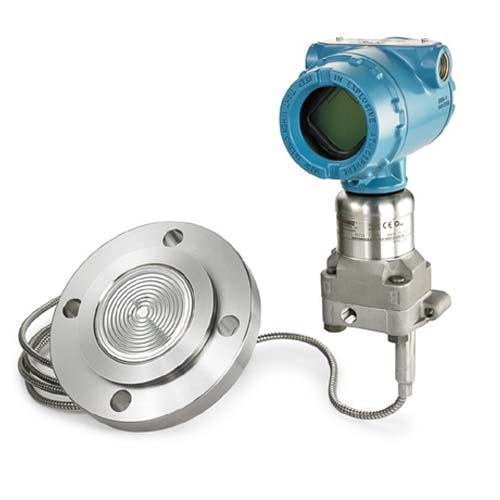
A Differential Pressure Transmitter is an industrial instrumentation device used to measure the difference in pressure between two points in a process system. It uses two pressure connections, commonly referred to as the high-pressure and low-pressure sides, to determine the pressure difference and convert it into a usable output signal.
Differential pressure measurement is widely used in industrial processes to monitor flow, determine liquid levels in suitable tanks and vessels, and measure pressure drops across filters, pipelines, and other equipment. When correctly selected and installed, a differential pressure transmitter helps operators monitor process conditions and support efficient plant operation.
Tronsoft Technologies provides industrial instrumentation solutions for pressure measurement, flow monitoring, level measurement, and process automation. As a Differential Pressure Transmitter Manufacturer and Supplier in Gujarat, Tronsoft Technologies supports customers looking for measurement solutions for industrial and process applications.
The right transmitter should be selected according to the required differential pressure range, static operating pressure, process medium, temperature, connection arrangement, and output requirements.
Differential pressure measurement is important in industrial systems where the pressure difference between two points provides useful information about process performance. A differential pressure transmitter measures this difference and sends a corresponding signal to a compatible monitoring or control system.
The instrument has two pressure inputs. One receives pressure from the high-pressure side, while the other receives pressure from the low-pressure side. The transmitter measures the difference between these inputs and converts it into a reading or electrical output based on its configuration.
Tronsoft Technologies offers industrial instrumentation solutions for applications requiring pressure monitoring and process control. Differential pressure transmitters can be selected for flow measurement across primary elements, liquid-level measurement in suitable tanks, and monitoring pressure losses across filters and other equipment.
Selecting the correct instrument involves more than choosing a differential pressure range. The maximum static pressure, overpressure limits, process fluid compatibility, installation arrangement, and required output must also be considered. These factors help ensure that the transmitter is suitable for the process and can be integrated into the existing control system.
A differential pressure transmitter measures the pressure difference between two process points, providing useful information for monitoring and control.
When installed with a suitable primary element, such as an orifice plate or Venturi tube, a differential pressure transmitter can be used to determine flow rate. The calculation depends on the primary element, process conditions, and configured measurement system.
Differential pressure can be used to determine liquid level in suitable tanks and vessels. Pressurized tanks may require compensation or an appropriate reference-pressure arrangement.
Monitoring the pressure difference across a filter or other equipment can help operators identify increasing pressure loss and determine when inspection or maintenance may be needed.
Depending on the selected model, the transmitter's output can be connected to compatible PLC, DCS, SCADA, and process-monitoring systems.
Differential pressure transmitters can be used across water treatment, chemical processing, power generation, oil and gas, and general manufacturing, subject to the instrument's specifications and process compatibility.
As a Differential Pressure Transmitter Supplier in Gujarat, Tronsoft Technologies supports industrial customers seeking instrumentation for pressure difference measurement, process monitoring, and automation projects.
Differential pressure transmitters are used in systems where pressure variation between two points helps operators understand process conditions. Typical requirements include measuring flow through a restriction, monitoring filter performance, and determining liquid level in suitable vessels.
Tronsoft Technologies assists customers with product enquiries and instrumentation selection. To identify an appropriate transmitter, customers should provide the required differential pressure range, maximum static pressure, process medium, operating temperature, connection type, and desired output signal.
For applications that involve PLC, DCS, or SCADA integration, the transmitter's output and communication capabilities should be confirmed against the control system's requirements before ordering.
The following table outlines key parameters to confirm when selecting a differential pressure transmitter. Fill in the exact values from the product datasheet before publishing.
| Parameter | Specification |
|---|---|
| Product Name | Differential Pressure Transmitter |
| Product Category | Industrial pressure instrumentation |
| Measurement Principle | Differential pressure measurement |
| Differential Pressure Range | Confirm the exact model datasheet |
| Maximum Static Pressure | Confirm the exact model datasheet |
| Overpressure Limit | Confirm the exact model datasheet |
| Output Signal | Confirm the exact model datasheet |
| Communication Protocol | Confirm the exact model datasheet |
| Power Supply | Confirm the exact model datasheet |
| Accuracy | Confirm the exact model datasheet |
| Process Connections | Confirm high-pressure and low-pressure connection details |
| Wetted Materials | Confirm compatibility with the process medium |
| Operating Temperature | Confirm the exact model datasheet |
| Installation Accessories | Confirm required manifolds, impulse lines, or mounting accessories |
| System Integration | Confirm compatibility with the intended control system |
Differential pressure transmitters are used in many industrial processes where the pressure difference between two points provides information about flow, liquid level, or equipment condition.
Differential pressure measurement can support monitoring of compatible filtration equipment, pipelines, and process systems in water treatment plants.
Chemical plants use pressure instrumentation to monitor process conditions and pressure differences across suitable equipment. The transmitter's wetted materials must be compatible with the process medium.
Differential pressure transmitters can be used in appropriate flow measurement and process-monitoring systems. Product selection must account for pressure limits, fluid compatibility, and installation requirements.
Pressure difference measurement can support monitoring of suitable utility and process systems in power-generation facilities.
Measuring pressure before and after a filter or strainer can help identify an increase in pressure drop, which may indicate loading or blockage. The acceptable differential pressure depends on the equipment and process.
A differential pressure transmitter can be configured for level measurement in suitable vessels by measuring the pressure associated with the liquid column. Pressurized vessels require an appropriate reference arrangement and engineering calculations.
Manufacturing facilities may use differential pressure transmitters to monitor equipment, fluid systems, and other processes where pressure differences are important operating parameters.
A differential pressure transmitter measures the difference between the pressure applied to its two sensing ports.
Step 1: Pressure is applied to both ports
The high-pressure port receives pressure from one point in the process, while the low-pressure port receives pressure from the other point.
Step 2: The sensor detects the pressure difference
The transmitter's sensing element responds to the difference between the two applied pressures.
The differential pressure is calculated as:
[
\Delta P = P_{\mathrm{high}} - P_{\mathrm{low}}
]
Step 3: The instrument processes the measurement
The transmitter's electronics convert the sensor response into a differential pressure value based on the configured measurement range.
Step 4: The transmitter provides an output
Depending on the model, the instrument sends a standardized output signal to a compatible monitoring or control system.
Step 5: The output supports process monitoring
The receiving system can use the measurement for indication, alarms, calculations, or control functions. For flow or level applications, the correct configuration and application-specific calculations are required.
Correct impulse-line installation, zeroing, calibration, and protection against unsuitable process conditions are important for reliable results.
Choosing a suitable differential pressure transmitter requires consideration of the measurement task and the conditions under which the instrument will operate.
Differential pressure range: Select a range that covers the expected pressure difference while providing suitable measurement resolution.
Maximum static pressure: Confirm the maximum pressure applied to the instrument, including when the differential pressure is low.
Overpressure protection: Check the allowable pressure on each port and the transmitter's documented overpressure limits.
Process medium: Verify that the sensing diaphragm and wetted materials are compatible with the fluid or gas.
Measurement application: Establish whether the instrument will be used for flow, level, filter monitoring, or another differential pressure measurement.
Output signal: Confirm compatibility with the receiving PLC, DCS, SCADA, or indicator.
Process connections: Check connection types, sizes, pressure ratings, and required accessories.
Temperature conditions: Verify the permitted process and ambient temperatures.
Installation arrangement: Consider impulse lines, manifolds, mounting orientation, and accessibility for maintenance.
Calibration requirements: Confirm the calibration range and procedure needed for the intended measurement.
Providing these details during an enquiry can help the supplier identify a transmitter that suits the application.
Tronsoft Technologies provides industrial instrumentation and automation solutions for process, utility, and infrastructure applications. Its product portfolio includes pressure transmitters, level transmitters, flow meters, temperature instruments, water quality analyzers, and automation solutions.
Customers can approach Tronsoft Technologies for:
Industrial instrumentation solutions: Products for pressure, flow, level, temperature, and other process measurements.
Application-based selection: Assistance in reviewing measurement requirements and selecting suitable instrumentation.
Automation integration guidance: Support in checking output compatibility with monitoring and control systems.
Technical enquiry support: Help with reviewing model specifications and installation requirements.
Broader instrumentation portfolio: Access to multiple instrumentation categories for industrial projects.
For a differential pressure transmitter enquiry, share the required differential pressure range, maximum static pressure, process medium, operating conditions, and intended application with the Tronsoft Technologies team.
1. What is a differential pressure transmitter?
A differential pressure transmitter measures the pressure difference between two points and converts that measurement into an output signal for monitoring or control.
2. What is a differential pressure transmitter used for?
It can be used for flow measurement with a suitable primary element, liquid-level measurement in appropriate tanks, filter pressure-drop monitoring, and other industrial applications requiring differential pressure measurement.
3. What is the difference between a pressure transmitter and a differential pressure transmitter?
A conventional pressure transmitter generally measures pressure relative to a reference, such as atmospheric pressure or a vacuum, depending on its type. A differential pressure transmitter measures the difference between two applied pressures.
4. Can a differential pressure transmitter measure flow?
Yes. When used with a suitable primary element, such as an orifice plate or Venturi tube, differential pressure can be used to calculate flow rate. The measurement system must be properly sized and configured.
5. Can a differential pressure transmitter measure liquid level?
Yes. It can measure liquid level in suitable tanks and vessels by using the pressure difference associated with the liquid column. Pressurized vessels require an appropriate reference-pressure arrangement.
6. Can a differential pressure transmitter monitor filter blockage?
It can monitor the pressure difference across a filter. An increasing pressure drop may indicate filter loading, but alarm thresholds should be determined from the filter manufacturer's recommendations and process conditions.
7. What output signals are available?
Available output signals vary by model. Confirm the exact output and communication options with the product datasheet before connecting the transmitter to a control system.
8. What is static pressure in a differential pressure transmitter?
Static pressure is the process pressure acting on the transmitter independently of the pressure difference being measured. The transmitter must be rated for the maximum static pressure expected in the application.
9. How do I select the right differential pressure transmitter?
Consider the required differential pressure range, maximum static pressure, process medium, operating temperature, output signal, connections, and measurement application. Confirm the final selection against the manufacturer's documentation.
Contact Us
Feel Free To Get In Touch With Us
Office Address:
Karve road, near Garware metro stn, Pune | 411030 India
Follow Us:-
Looking For More?
Call Support 24x7
+91 7559349467