

Call Support 24x7
+91 7559349467
Learn how to select the correct electromagnetic flow meter size using pipe diameter, flow rate, liquid conductivity and operating conditions. Discover common sizing mistakes and how to choose a suitable meter for industrial applications.
Selecting an electromagnetic flow meter doesn't merely depend on the pipe line size it is being installed on. There are several factors that need to be considered while sizing the flow meter. This blog we are throwing some light on some of the important factors that one should consider while sizing the flow meter correctly.
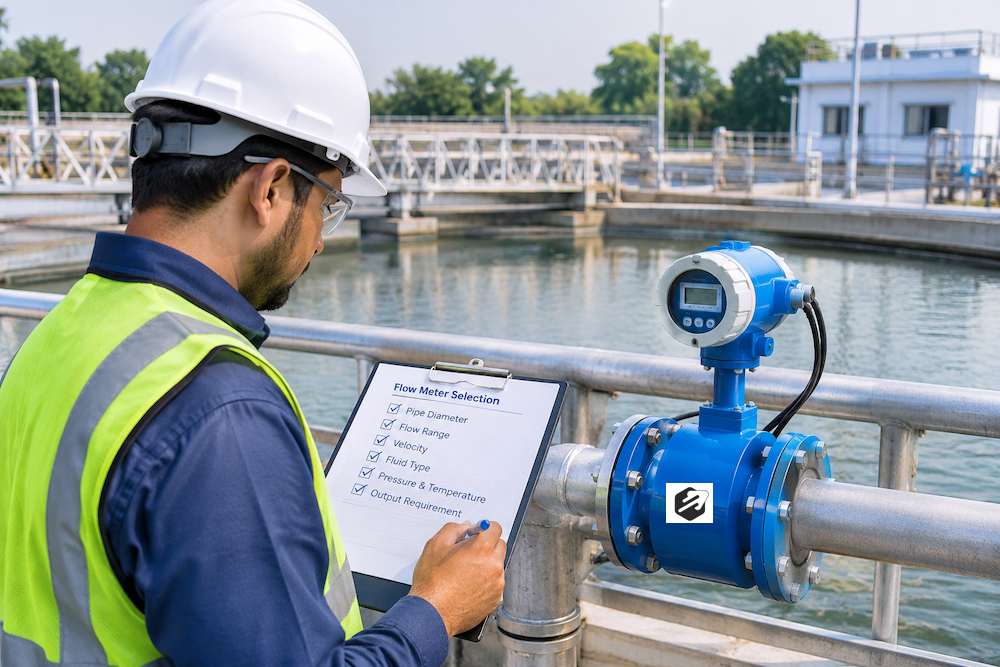
Selecting the correct electromagnetic flow meter size is essential for accurate flow measurement, reliable operation and long-term performance. Choosing a meter based only on the existing pipeline diameter can lead to poor measurement performance, particularly when the actual flow rate is much lower or higher than expected.
In this guide, we explain how to select the right electromagnetic flow meter based on pipe size, flow rate, liquid velocity and application requirements.
An electromagnetic flow meter, also known as a magnetic flow meter or mag flow meter, measures the volumetric flow rate of electrically conductive liquids.
Correct sizing helps ensure that the meter operates within a suitable velocity and flow range. An incorrectly sized meter may experience poor low-flow performance or operate at unnecessarily high velocities.
The objective is to select a meter that suits the actual process conditions rather than simply matching the existing pipe diameter.
The pipeline diameter is an important starting point when selecting an electromagnetic flow meter. However, the correct meter size also depends on the expected flow rate.
For example, a DN100 pipeline does not automatically require a DN100 electromagnetic flow meter.
If the flow rate is consistently low, a smaller meter may be worth evaluating. If the flow rate is high, the velocity and pressure-loss implications must be considered before finalising the size.
Any change in meter diameter should be checked against installation requirements, allowable velocity and the manufacturer's sizing recommendations.
One of the most important steps in electromagnetic flow meter sizing is establishing the operating flow range.
Before requesting a quotation, determine:
For example, consider a water pipeline with the following operating conditions:
These figures help the manufacturer evaluate the expected liquid velocity and determine whether the proposed meter size is appropriate.
Providing only the pipe diameter is not enough for a reliable sizing recommendation.
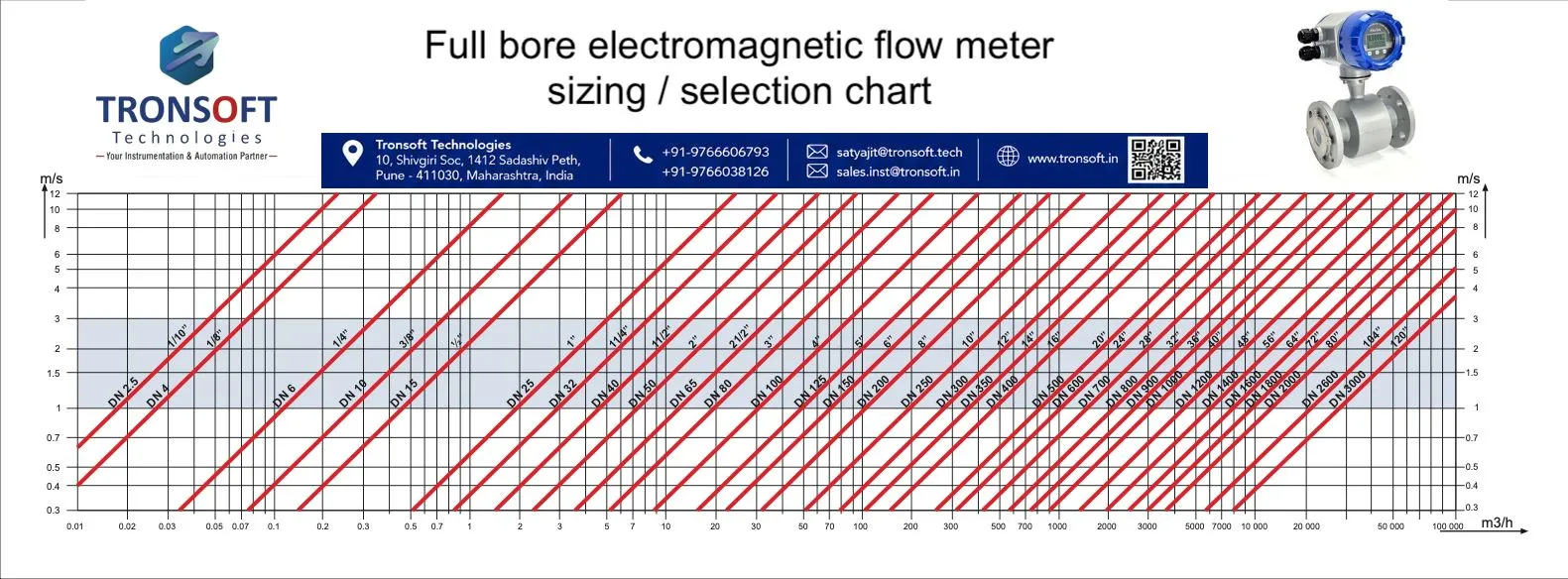
Flow rate and liquid velocity are directly related to the internal diameter of the measuring tube. The relationship is:
Flow rate = Cross-sectional area × Average velocity
For a circular pipe: Q = (π × D² × V) / 4
Where:
For practical electromagnetic flow meter sizing, velocity is often evaluated alongside minimum, normal and maximum flow. A range around 0.5–5 m/s is a useful preliminary reference for many applications, but it is not a universal acceptance criterion. The suitable range depends on the meter design, accuracy requirements, fluid properties and operating conditions. You can also refer to the flow chart shared in the above image. To get help undestanding the usage of the flow chart, contact Tronsoft Technologies
An electromagnetic flow meter requires an electrically conductive liquid. Common applications include:
The liquid's conductivity, chemical compatibility, temperature and suspended solids content should be considered during selection.
Correct sizing is not only about diameter and flow rate. The following parameters also affect the final selection:
Pressure and temperature: Confirm the normal and maximum operating conditions.
Liner material: Select a compatible liner based on the liquid, temperature and pressure.
Electrode material: Choose suitable electrode materials according to the fluid's chemical characteristics.
Installation: Consider pipe bends, valves, reducers, straight pipe lengths and the possibility of partially filled pipes.
Outputs: Specify requirements such as 4–20 mA, pulse output, RS485 or Modbus RTU if integration with PLC, SCADA or DCS is required.
An electromagnetic flow meter should normally be installed in a location where its measuring tube remains completely filled with liquid during operation.
Avoid these common mistakes when selecting a magnetic flow meter:
Avoiding these mistakes can help improve measurement reliability and reduce installation and commissioning problems.
Tronsoft Technologies manufactures and supplies electromagnetic flow meters for industrial and municipal applications.
The correct configuration depends on the process fluid, flow range, pipe diameter, pressure, temperature, liner, electrode material and installation conditions.
If you are unsure which size is suitable for your application, share the following information with the Tronsoft team:
Contact Us
Feel Free To Get In Touch With Us
Office Address:
Karve road, near Garware metro stn, Pune | 411030 India
Follow Us:-
Looking For More?
Call Support 24x7
+91 7559349467